
Billionaires buy stupid things because they buy their own hype first.

Billionaires buy a lot of stupid things, but the dumbest thing they buy is their own hype.
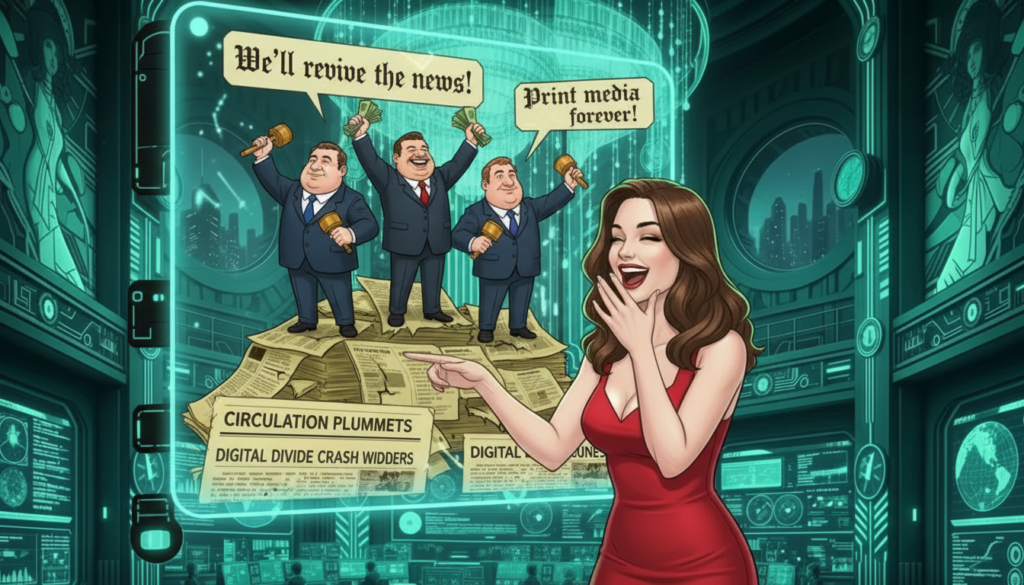
Narcissism blinds. They may have gotten the memo that legacy journalism is dead, but they still behave as if the journalism fairy is going to resurrect corpses on command. Not happening.
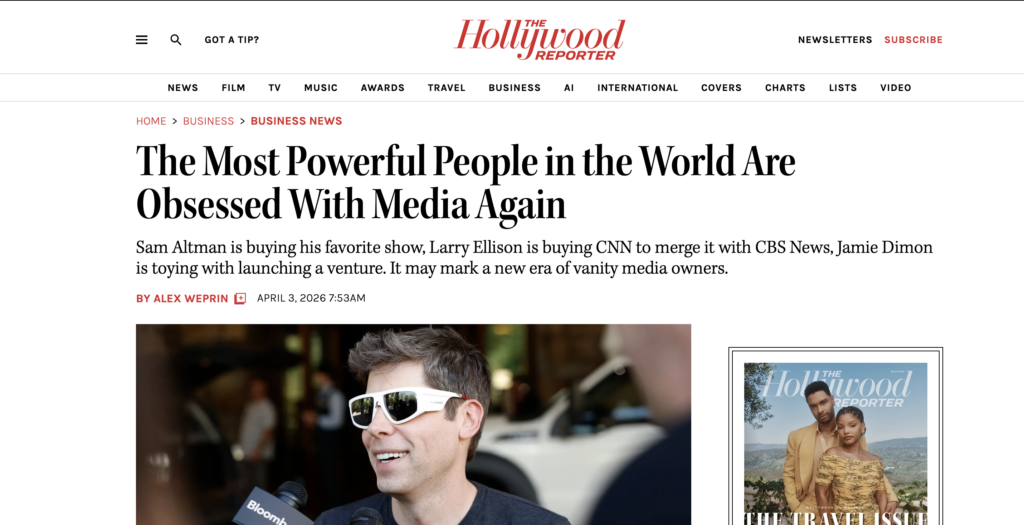
Every few years, some knucklehead with money decides they have deific powers: just throw cash at a dead profession and, voila!, the corpse will rise and serve its master. Then they assume they can pipeline their self‑serving propaganda through the revived outlet and the public will obediently believe it. Like magic.
Reality keeps spoiling that fantasy. Jeff Bezos’ ownership of The Washington Post was sold as a $250 million “rescue mission,” but after the initial glow, the paper is now publicly admitting steep losses and a failing business model under his tenure. The Ellison himbos are proving it in real time with CBS News, marching it toward irrelevance while imagining “synergies” will substitute for a public that no longer cares.
The problem is simple: reporters are supposed to keep watch on robber barons, not work for them. Journalists, when they are doing their job properly, should be a living nightmare for people in power, left, right, and everything in between. Putting billionaires in charge of newsrooms flips that relationship on its head. Instead of scrutiny, you get vanity projects, reputation laundering, and weapons for boardroom feuds.
These kinds of owners don’t understand struggle or obstacles. They use their rags to swap favors or settle scores, but that’s a moot point: legacy journalism collapsed a long time ago, and people are not going to pick up a news product just because a particular billionaire bought it. These are not movie stars who can “open” a film on opening weekend; they are overlords and robber barons who think they can take a dead horse, rebrand it as “content,” and ride it back into relevance.
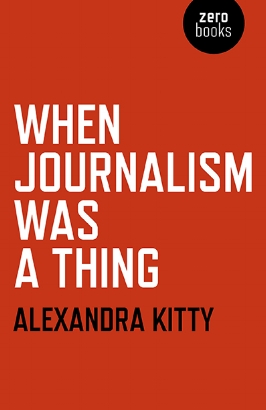
If people with media cred couldn’t make it fly, you’re not going to do it, either. The core crisis isn’t a lack of right‑wing spin or a shortage of billionaire meddling. As I argued in my 2018 book When Journalism was a Thing, journalism became a curiosity because it stopped mattering to the public, long before the latest crop of tech titans and financiers decided to play newsroom savior. I laid out, with sixty‑five pages of references, why legacy media collapsed, and nothing has improved for the profession since.
Journalism did not die because it wasn’t conservative enough. It did not die because the “right” rich guy hadn’t bought the “right” outlet yet. It died because audiences became their own newsrooms through social media, because the public could talk back, compare notes, and bypass gatekeepers. And it died because journalism, as practiced by legacy outlets, was never truly empirical or empathetic. The public evolved; the profession did not.
Billionaires don’t buy newsrooms because they love journalism; they buy them the way bored rich people buy exotic pets. They want something impressive pacing behind glass that they can point to at parties. Reporters become zoo animals on retainer, trained to roar on command at approved enemies and purr on cue for house patrons. The second those same reporters try to bite the hand that feeds them, they’re tranquilized with “restructuring,” “realignment,” and “cost efficiencies,” then quietly shipped off to the unemployment sanctuary.
But by then, the billionaire’s carnival act becomes a laughingstock, their Midas touch proves to be a sham, and after bleeding enough money, they quietly look for the exit as the profession remains as lifeless as ever…just with fresher branding on the tombstone.
Tags: Alex Weprin, Alexandra Kitty, CNN, Hollywood Reporter, Jamie Dimon, Jeff Bezos, Journalism, Larry Ellison, Propaganda, Sam Altman, When Journalism was a Thing