
A few thoughts about self-interrogation.

1. “I could shoot somebody”: the boast of impunity
In 2016, Donald Trump stood at a rally and said he could shoot someone “in the middle of Fifth Avenue” and not lose any voters. It was framed as a joke, but it was also a diagnostic: he was openly testing how much violence and lawlessness his audience would accept as part of the brand.
That line set the baseline: a man who believed he sat above consequences, narrating his own impunity in public and being rewarded with cheers, not recoil.
2. “I am not a crook”: the presidential denial curse
Richard Nixon’s famous line, “I am not a crook”, remains the classic example of a president trying to shut down a question by repeating the most damning word attached to him. History did not remember the denial; it remembered the accusation, permanently fused to his name.
The lesson was clear: once a president is reduced to declaring what he is not, the battle over his legitimacy is already lost in the public mind.
3. “I’m not a basket case” and “I’m not a rapist”
Trump has now walked into that same trap twice in a matter of days. After the Washington Hilton chaos, he insisted, “To be honest with you, I’m not a basket case,” volunteering the phrase that critics and ex‑staff had already been using about his mental decline.
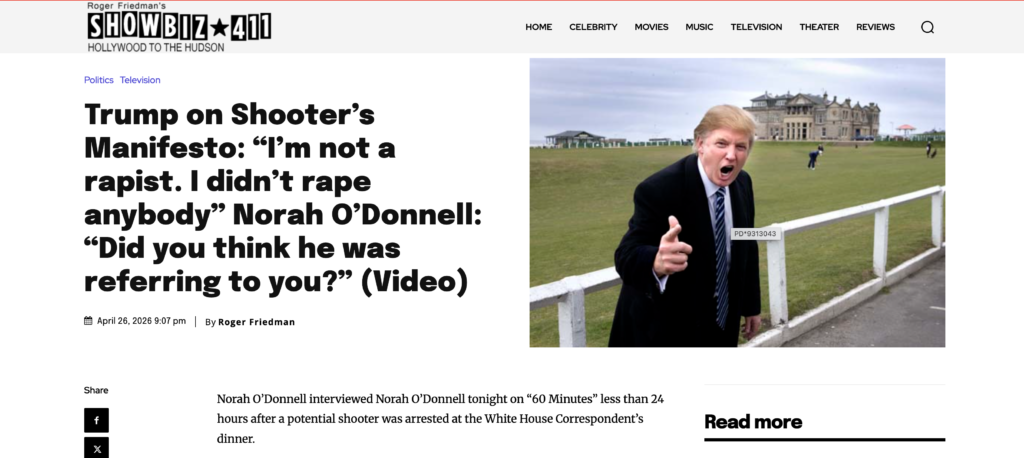
Then, on 60 Minutes, when Norah O’Donnell read a manifesto line condemning “rapists and pedophiles,” he snapped, “I’m not a rapist. I didn’t rape anybody. I’m not a pedophile.” This, despite the fact that in the E. Jean Carroll litigation the judge explicitly said that, in ordinary parlance, what the jury found him liable for “constitutes rape.”
Taken together, these are not slips. They are a sitting president repeatedly tying himself, in his own words, to insanity, rape, and child abuse, not because anyone forced those words into his mouth, but because he feels compelled to deny them out loud.
4. The Jim Can’t Swim problem: unintentional self‑interrogation
In a Reid‑style interrogation, the investigator assumes guilt, keeps up pressure, and waits for the suspect’s denials to escalate and narrow until they reveal what’s really gnawing at them. A Jim Can’t Swim breakdown will pause on those moments: the suspect who suddenly blurts “I’m not a monster,” or “I didn’t hurt that kid,” before anyone in the room has actually used those exact words.
Trump is now running that pattern on himself in public. The arc goes from “I could shoot somebody and not lose support” (boast of impunity), to “I’m not a basket case” (fear of being seen as mentally unfit), to “I’m not a rapist… I’m not a pedophile” (denial of the ugliest labels already hanging over him in law and culture).
This is how real interrogations often look just before a collapse: the subject starts naming the very crimes they most dread being tied to, trying to outrun them with words. You don’t need him to ever say “I am not a murderer” to see where his own internal interrogation has already gone. You just have to listen to what he’s suddenly decided he needs to deny.
Tags: 60 Minutes, Donald Trump, Journalism, Norah O’Donnell, Roger Friedman, Showbiz411, United States