Why Gen X Can’t Bail Out Entertainment Anymore.

If this was going to be a “think piece”, it missed the mark. The writer understood things were falling apart, but strictly blamed it on streaming, gate-keeping, and the usual suspects. This is a small fraction of the reason.
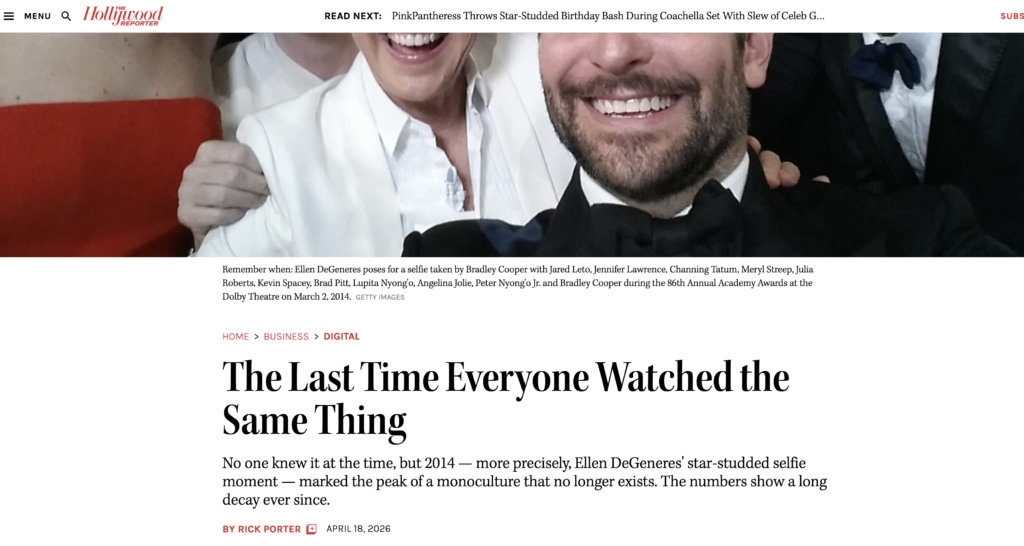
There are two factors at play: (A) An aging Gen X, and (B) COVID-19 lockdown theater.
The simple truth is psychological investment in monoculture is strictly a Gen X quirk. It defines this generation. It was their actual currency. To be seen as with it and hip with this generation was to list off what pop culture you consumed. You had to match the pop culture with its general worth in knowing it. To show belongingness, list the mainstream popular and critical hits. To show superiority and elitism, list the obscure cult hit. “It’s like we’re in a Batman movie” plays differently than “It’s like we’re in Rat Pfink a Boo Boo.”
Pop culture references was the language of Gen X. It was the way that generation processed the world around them: movies, television, and music were the A-list menu, while books and comics were B-list, and video games and retail and restaurant franchises were C-list. New entertainment played different than vintage, but both had to be carefully curated for it to have the optimal effect.
But over time, being there when the vintage vehicle was once cutting edge can be distressing. Marking your life through Oscar wins or song lyrics reminds you of the time that slipped away from you.
And yes, there is a song for it.
This is the generation who had love for Disney proper, Marvel and Star Wars. They bought into the larger than life mythos, the hero’s journey, and used pop culture as a safe space to interact with people.
Now, as this generation is mostly in their 50s, the monoculture as rallying point has less meaning: you’re not the same young Turk who could slap your face on other people’s fantasies: you know those manufactured pre-fab dreams can never come true. You can sit around thinking about the comforts of old Match Game and Tattletales reruns or you can take your mid-life crisis like an adult and start figuring out appropriate new dreams to pursue.
And yes, there is a song for that, too.
But that’s not where the fading pull of monoculture lies. It’s not the hard break.
It’s COVID-19 theater.
And is was nothing but theater.
What was supposed to make all the masses obedient to elites (“We’re all in this together!”), didn’t quite do it’s job: this was an all-or-nothing gambit. You either had 100% compliance, or you essentially had zero no matter how high the compliance rate otherwise was.
Because COVID-19 was interactive and immersive propaganda that meant the audience weren’t just spectators: they were participants. It was part Tony and Tina’s Wedding, where the audience invested emotionally, and part living video game where you think you have agency based a limited number of rigged choices with fixed paths and endings.
What actually happened?
Four major things happened, all unforeseen consequences:
1. People wore costumes (i.e., masks and shields) and could pick their own supporting cast and then post their own “series” on social media, and this live-action, real-time horror movie was more exciting than watching a canned pandemic horror in the movies or a video game. You were your own sprite that you could control: avoid the spiky ball nasties and you win. If you don’t, Game Over, at least in theory.
2. Gen X no longer had a safe space for their cognitive scaffolding: lockdowns meant production on their programs and films weren’t being churned out at the acceptable rate, and they didn’t have as many people to trade currency with. You could even be seen as frivolous and offensive by rattling off all the movies the lockdowns reminded you of as you stood in the obscenely long lines outside of Costco, if you weren’t berated for being careless.
3. Legacy media, who only had Gen X left to prop them up, stopped the celebrity churn. It was too busy with the ghoul trackers flashing on the screen to remind Gen X was new HBO show had critical buzz and intricate Quentin Tarantino easter eggs. That’s not cool and that’s not fun. You can’t show off as an aloof observation of the world when all anything Corporate America does is plaster fear-mongering jingos and posters everywhere. It was overkill.
4. The monoculture scaffolding was yanked away from the safe medium of fictional stories into a propagandistic interpretation of real world events. This forced switch made going back impossible. The signal was clear: this pleasant dopamine fix of cultivating my pop culture knowledge could be used to shake me to the core. Hollywood went along, but it could never recover from it.
While people quickly forgot about that global medical horror porn extravaganza, it did something damaging to Gen X: it instructed them that monoculture was no longer a safe space, and quietly, they abandoned it, just as younger generations were churning out their narcissistic dreck on TikTok, Twitch, and Insta.
The love affair between Gen X and Hollywood cannot be overstated. It was loud, real, and captured millions of seasoned voices who were media savvy. This gave younger generations traction and then the pull of monoculture: what Hollywood and the United States absolutely needed to shape their trajectory and herd the little people was broken. Gen X, who understood safe social cohesion, were wounded as a collective force, and the US will be paying for it for a long time to come.
But with the introduction of AI to a mass audience, the Millennials and Gen Z, the younger kids who were cultivated to believe they were the monoculture through social media, are now going, six years later, into the same series of shocks. The unintended takedown of the older generation left the younger and more gullible ones vulnerable, and everything they thought they knew about winning at reality has been thrown out the window, just like Gen X.
The 2020’s are a decade of flux, and when the dust settles, the scaffolding will not resemble anything it has been until now. The humbling of generations has been sure and swift, but as we are about to enter socioeconomic humbling on every level, the actual results will take the global village in bold new directions, most don’t have the scaffolding to understand, let alone anticipate.
Yet it is all right on time, and right on schedule.
Tags: AI, Artificial Intelligence, Hollywood Reporter, Journalism, Propaganda, Rick Porter, United States