
American Dream 3.0: Built by Oddballs, Not Magazine Covers

The American Dream 3.0 Won’t Have a Leading Man
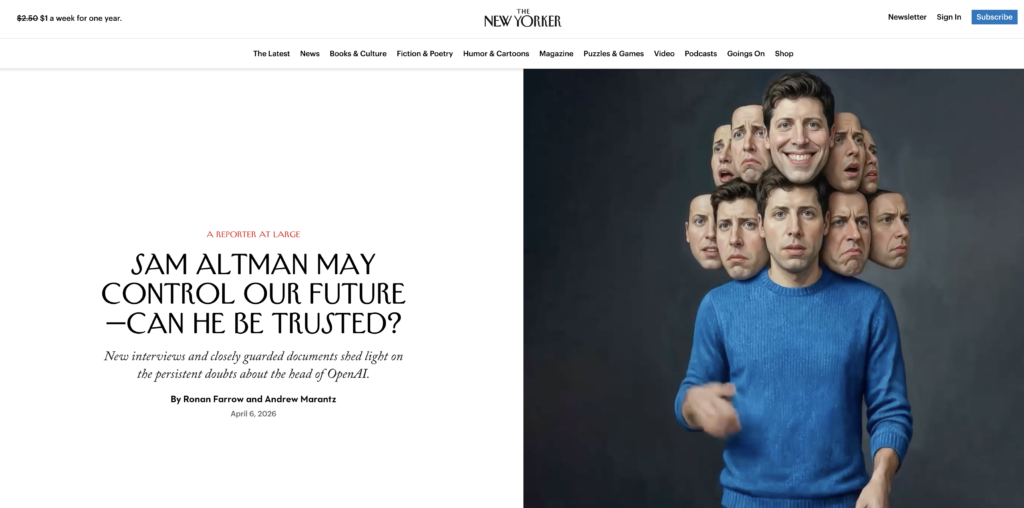
Legacy media keeps trying to cast Sam Altman as the new Steve Jobs, as if the only way to understand AI is to find a patriarch for the poster and pretend he “controls the future.” It’s the same scaffolding they’ve used for a century: one great man, one big myth, everyone else as extras. But that script is out of step with the world they’re trying to describe. The people actually building American Dream 3.0 aren’t on magazine covers, don’t talk like messiahs, and aren’t asking anyone to trust them on faith. They’re quiet founders, stubborn oddballs, and an emerging class of users who can say a simple, impolite sentence Altman’s profile can’t print: “AI helped me do something I was never supposed to be able to do.”
American Dream 3.0 won’t be delivered by a man on a magazine cover. It will be written by quiet builders, stubborn dark horses, and an AI that’s finally trusted because it earned that trust one impossible project at a time.
The Quiet Builders, Not the Flapping Mouths
Steve Jobs didn’t invent the personal computer; he made a particular configuration of it feel inevitable: something small, humane, and useful enough to live on your desk instead of in a lab. He wasn’t trusted because he shouted the loudest about “controlling the future.” He was trusted, to the extent he was, because he kept coming back to a simple question: what will this box actually do for you at home or in your hand?
Sam Altman has been framed as that kind of figure for AI, but everything about his performance signals the opposite. The rhetoric is apocalyptic and patriarchal, civilization, extinction, who should be allowed to use the machine, without the corresponding clarity about mundane, concrete use. AI became a culture war before it became a household tool, and his mouth did a lot of that damage. People who might have embraced the technology as a Swiss Army knife were first introduced to it as a cross between a doomsday device and a priestly relic.
Meanwhile, the people actually building the scaffolding of American Dream 3.0 don’t sound anything like that. Someone like Aravind Srinivas is closer to the Jobs side of the spectrum: technically serious, casually spoken, and relentlessly focused on utility, not prophecy. When he talks about AI, it’s not to audition as the avatar of the future; it’s to explain how you can answer a question, research a topic, or build a small company from your kitchen table. His line, yes, AI will disrupt legacy jobs, but now you have the chance to create your own company, does more to democratize power than a hundred extinction panels.
That’s the kind of voice American Dream 3.0 actually listens to. It doesn’t ask for obedience or awe. It says: here is a tool, here is what it can do for you, here is how it can help you get out from under the people who think only they are qualified to have futures.
None of this will sit well with the AI Doomers. They need the technology to stay abstract and terrifying because their authority depends on a population too scared to try it for themselves. The last thing they want is a visible control group of people quietly using AI to build companies, tools, and independent careers that don’t run through legacy gatekeepers. So they will attack the innovators, smear the early adopters, and turn social media into an even more joyless pit of fear‑mongering and purity tests. But that strategy contains its own defeat: once enough “AI 1.0” users break out, people who can say, in public, “I used this and my life is better”, they become living rebuttals to the sermon. Their success creates a feedback loop: it makes the doomer platforms look shrill and dated, it teaches builders what actually works in the wild, and it helps push AI 2.0 toward the one thing the old order can’t compete with: systems tuned by real outcomes instead of hypothetical catastrophes.
AI as Feedback Engine, Not Vending Machine
The biggest mistake people made with AI 1.0 was treating it like yet another vending machine in the American Dream arcade. Put in a prompt, press a button, and out pops content that makes you look smarter, more productive, more “together” than you actually feel. It was social media logic with better grammar: the point was still to maintain the mask, to project competence and certainty while quietly hoping no one tugged at the seams.
But the real power of AI isn’t in dispensing polished masks. It’s in tearing them off. Used properly, these systems behave less like a slot machine and more like a ruthless tutor: ask a vague question, get a vague answer; ask a precise one, get your blind spots illuminated in excruciating detail. Try to wave your hands through a business plan and it will politely ask about unit economics. Pretend you understand a topic and it will happily quiz you until you realize you don’t. It’s the opposite of a feed tuned to flatter you; it’s a mirror tuned to show you where you’re not as good as you thought.
That’s exactly why AI is so dangerous to American Dream 2.0. Social media taught people to hide their flaws, polish their personas, and equate “authenticity” with a carefully curated brand. AI, in its more interesting uses, forces people to do the thing the kits never demanded: find the playbook that actually fits them. It lets a user in a small apartment quietly test business models, workflows, and roles until something clicks with their temperament and constraints, instead of contorting themselves to fit some hustle‑culture template. No funny looks if the idea is outré; the machine doesn’t care. It just starts helping you model it, stress‑test it, and refine it until the only remaining question is whether your appetite for the work matches your appetite for the fantasy.
In that sense, AI is deeply impolite technology. It refuses to participate in the cultural lie that everyone is already fine as they are while simultaneously promising them greatness. It makes visible the gap between who you are and what you want, and then, instead of shaming you, it offers to help you close it.
The Oddballs Who Don’t Need Permission
The last piece of American Dream 3.0 isn’t a CEO or a model; it’s the people who were never supposed to be in the story at all. The eccentrics, the dark horses, the ones who could never quite contort themselves into corporate ladders or influencer kits. Under Dream 2.0, they had two options: fake a persona they couldn’t stand, or disappear. Under Dream 3.0, they get a third: quietly use AI to build a life that works for them, whether or not anyone else finds it aspirational.
These are the people who will give the new Dream its proof. A single parent who uses AI to turn a niche obsession into a small, sustainable business from the kitchen table. A neurodivergent coder who leans on an agentic system to handle the social and bureaucratic friction of freelancing while they focus on the hard parts. A mid‑career worker who never fit office politics, using AI to map their real strengths and build a portfolio around them instead of the roles they were told to chase. None of them have to go viral. They just have to be able to say, to someone they trust, “I had an impossible dream and this thing helped me every step of the way.”
No Leading Man Required
That’s why the old “great man” scaffolding looks so dated against what’s actually happening. American Dream 1.0 needed a national myth and a handful of visible winners. Dream 2.0 needed platforms and poseurs to keep everyone feeding the vending machines. Dream 3.0 doesn’t need a leading man. It needs three things: quiet builders shipping tools that behave like trusted advisors, not slot machines; an AI layer that exposes your limits and then helps you work around them; and a growing chorus of oddballs whose lives are the answer to the only question that really matters now: did it help you do something you couldn’t have done before?
Legacy media will keep trying to put a patriarch on the poster. They’ll keep asking whether Sam Altman can be trusted with “our future,” as if the future were a toy he might drop. But by the time they finish the next long read, the future will have leaked out through a thousand side doors: into small apartments, strange projects, unfashionable neighbourhoods, and quiet collaborations between humans and machines that were never waiting for anyone’s blessing. American Dream 3.0 won’t arrive with a keynote. It’ll arrive the moment enough people stop asking who’s in charge of the future and start using the tools on their desk to build one.
Tags: AI, Andrew Morantz, Aravind Srinivas, Artificial Intelligence, New Yorker, OpenAI, Perplexity, Ronan Farrow, Sam Altman