AI Doomers and their Warped Sense of “Creativity”

fern has an interesting documentary about Lego, but it glides past the most revealing detail. Lego didn’t invent the plastic brick; it copied one.
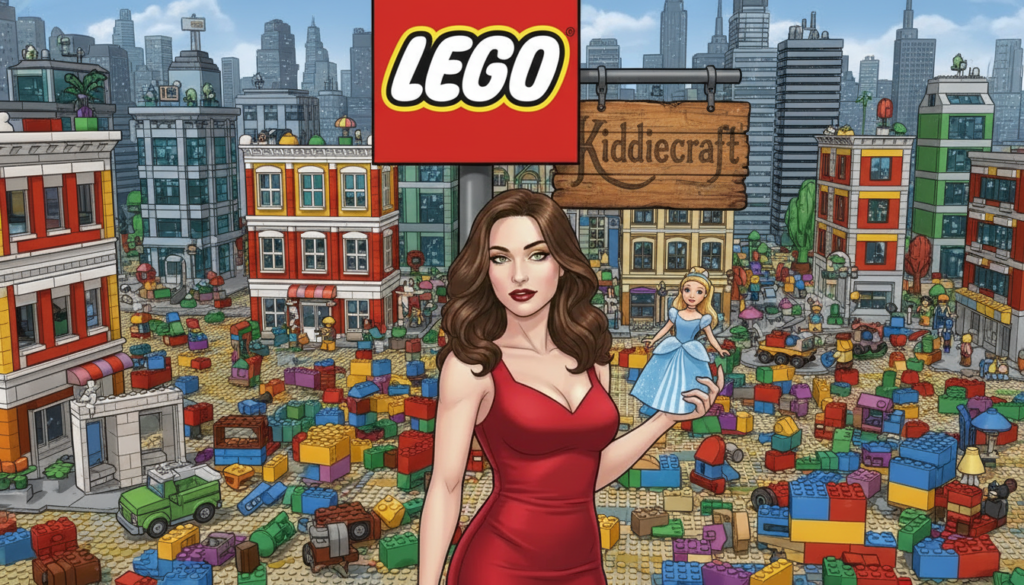
Lego’s origin story sounds inspirational until you put the missing name back in: Hilary Fisher Page, the British toymaker who patented Self‑Locking Building Bricks and was already selling plastic interlocking cubes while Lego was still a wooden‑toy outfit. His company, Kiddicraft, did the conceptual heavy lifting; Lego did the branding, refinement, and global rollout. When Lego finally bought the rights from Page’s estate in 1981, it wasn’t to honor a forgotten pioneer so much as to tidy up the paperwork behind its “original” idea.
The irony is that no one stages moral panics over Lego’s very profitable act of creative borrowing; we call it innovation, nod approvingly, and step on yet another brick in the dark. The same culture that shrugs at a plastic empire built on Kiddicraft’s blueprint suddenly clutches its pearls when the borrower is an algorithm instead of a Danish toy company. AI Doomers talk as if “real” creativity means conjuring something from a vacuum, but the history of Lego, and most of our cultural icons, says otherwise.
If iteration is theft, then our childhoods were fenced goods. What AI is doing with datasets is structurally no different from what Lego did with Kiddicraft or what film studios do when they raid the public domain: digest existing work, remix it, and ship a new configuration.
Disney runs on the same operating system of respectable plagiarism. Its golden‑age “originals” are industrial‑strength retellings of stories the studio didn’t invent: Snow White, Cinderella, Sleeping Beauty, Pinocchio, Bambi, all scrubbed, merchandised, and locked up as if the Brothers Grimm and company were junior staffers. The company spent decades mining the public domain for raw material, then turning around and lobbying to keep its own versions out of that very same public domain for as long as possible.
So why did the Doomers never declare Disney an existential threat to creativity? Because, for a long time, Disney was the dream buyer. People flooded the internet with free stories, spec scripts, fan art, and pitches, hoping the Mouse would notice, back up the money truck, and turn their “IP” into the next animated franchise. The fantasy was always transactional: give the work away for nothing now, maybe win the corporate lottery later.
AI torpedoes that fantasy. A model can inhale their “creative giveaways,” remix them into something else, and there’s no conference call, no option agreement, no red‑carpet premiere with their name buried in the credits. What they really resent isn’t that AI copies; it’s that AI copies without offering the comforting myth that they’ll one day get paid for it. The outrage is less about purity of art and more about the closing of a fantasy income stream.
Let’s not pretend we don’t know what this grievance is really about. For years, creatives were told to “build a portfolio online,” to give their work away on platforms and hope a studio like Disney would swoop in, cut a cheque, and turn their “IP” into a franchise. The system normalized a kind of optimistic exploitation: you donate free labour and ideas today in exchange for a lottery ticket tomorrow. When Disney strip‑mined fairy tales and public‑domain literature, it was forgiven because the pipeline still dangled a faint promise: maybe, one day, you could be on the profitable end of that machine.
AI shatters that fantasy. A model can swallow their posts, stories, art, and scripts, and there is no agent, no option contract, no studio meeting: just a statistical remix that never needs their name or signature. The panic dresses itself up as a defence of “creativity,” but underneath it’s a very specific economic disappointment: the realization that the old dream of being discovered and bought out by a legacy gatekeeper has been replaced by a technology that doesn’t need to buy them at all. That’s the wound that’s bleeding; the originality talk is just the bandage pattern printed on top.
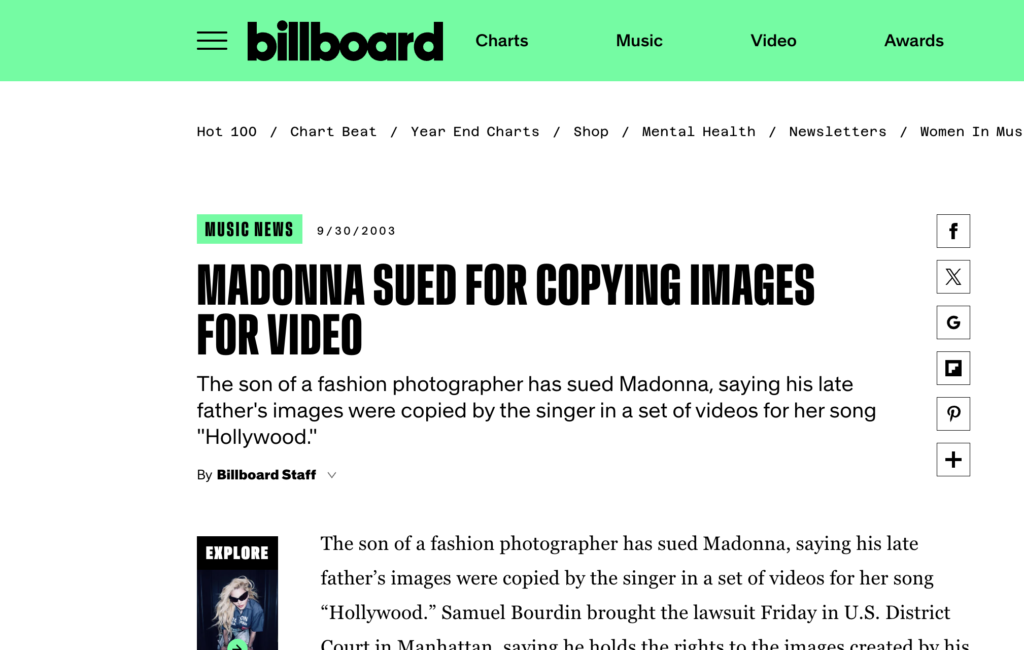
We keep insisting that “originality” is sacred, but our actual behaviour says otherwise. Pop culture rewards familiarity wearing a new outfit; it wants something it already half‑recognizes. Madonna is practically a case study in this. She built a blockbuster career not by pioneering a wholly new musical language, but by cannibalizing existing styles, images, and subcultures, folding underground fashion, religious iconography, old Hollywood glamour, and other artists’ visual ideas into a package the mainstream could process. When she was sued for copying imagery in her videos, it didn’t derail her; it confirmed what everyone already knew but didn’t really mind: the product worked because it was borrowed, remixed, and amplified, not because it descended from the heavens in pristine originality.
If we genuinely valued originality above all else, Madonna would have been punished for derivativeness instead of canonized for it, Disney would be a niche studio, and Lego would be a historical footnote behind Kiddicraft. We don’t live in that world. We live in a world that constantly proves it prefers recognizable novelty: just different enough to feel fresh, just familiar enough to feel safe. AI isn’t violating some ancient creative commandment; it’s automating the very pattern of derivative, profitable recombination we’ve been cheering for decades.
Lego quietly standing on Kiddicraft’s shoulders, Disney strip‑mining folklore for blockbusters, Madonna turning other people’s aesthetics into pop spectacle: none of these were treated as existential threats to creativity. They were treated as the normal cost of doing business in a culture that runs on remix, reference, and repetition. AI is just the first time the same process arrived without a human front‑person to mythologize, brand, and cut deals around it. The panic isn’t that recombination suddenly appeared; it’s that the mask finally slipped, and we had to admit that our most “original” icons were playing the same game all along.
Tags: AI, Artificial Intelligence, Billboard, Disney, Fern, Guy Bourdin, Kiddiecraft, Madonna, Propaganda