
RTO Was Always a Stupid Idea. Gas Prices Prove It.

There was never any serious business case for mandatory return‑to‑office. Once remote work proved not only viable but as productive or more productive for most knowledge workers, that should have been the end of the argument. A study covering 800,000 employees found productivity stayed stable or improved when people worked from home, while remote workers gained roughly 72 minutes a day by eliminating commutes and often reinvested a chunk of that time back into work. Other surveys now show that a large majority of employees and managers say remote or hybrid arrangements boost productivity, not harm it.
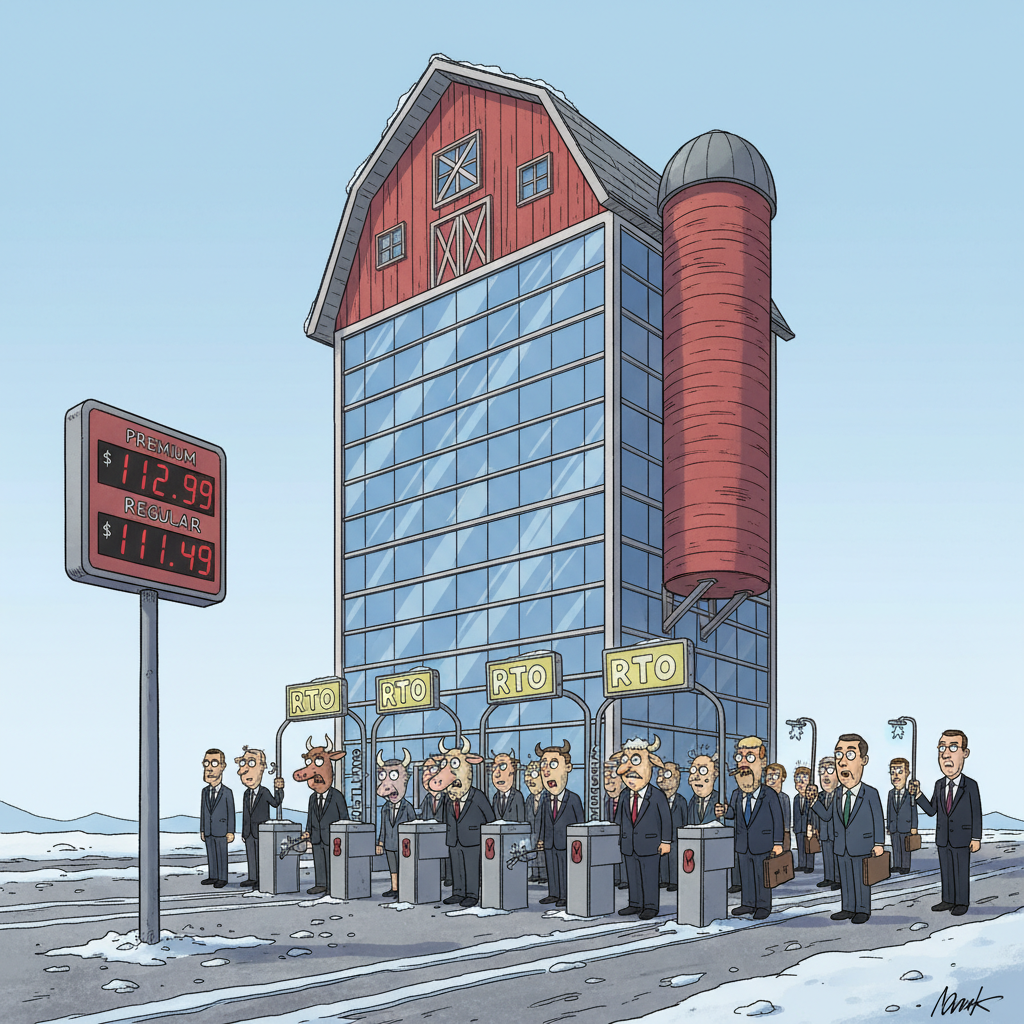
So why the RTO crusade? Because it was never about productivity. In the office, bad bosses can conduct affairs, sexually harass subordinates, and run their little fiefdoms through proximity, gossip, and performative “face time.” Research shows many executives openly admit using RTO as a pressure tactic: one 2024 survey found about a quarter of leaders hoped mandates would push certain employees to quit, effectively using the policy as a stealth layoff tool rather than a performance lever. That is not management; that is control for its own sake.
Governments didn’t cover themselves in glory either. Ottawa and several provinces have pushed public servants back into offices three days a week or more, despite widespread evidence that flexible arrangements are at least as effective. This has less to do with “the economy” than with restoring an old choreography: packed transit, clogged highways, and downtown office towers propping up commercial leases, parking revenues, and adjacent businesses. Just get the livestock back to the barn.
The irony is that the data on engagement and productivity under RTO mandates is brutal. A cluster of recent studies shows that forcing people back reduces engagement, morale, and retention without delivering measurable gains in output. One analysis found RTO mandates increased turnover by roughly 14 percent and triggered a visible brain drain at firms like Microsoft, Apple, and SpaceX as top performers simply left. Another set of surveys shows that when workers have a say in where they work, they are more likely to exceed expectations and intend to stay; when mandates hit, high performers and women in particular are more likely to walk. In Canada, engagement scores are markedly higher for fully remote and hybrid workers than for those rarely allowed to work from home, and higher engagement correlates with significant productivity gains.
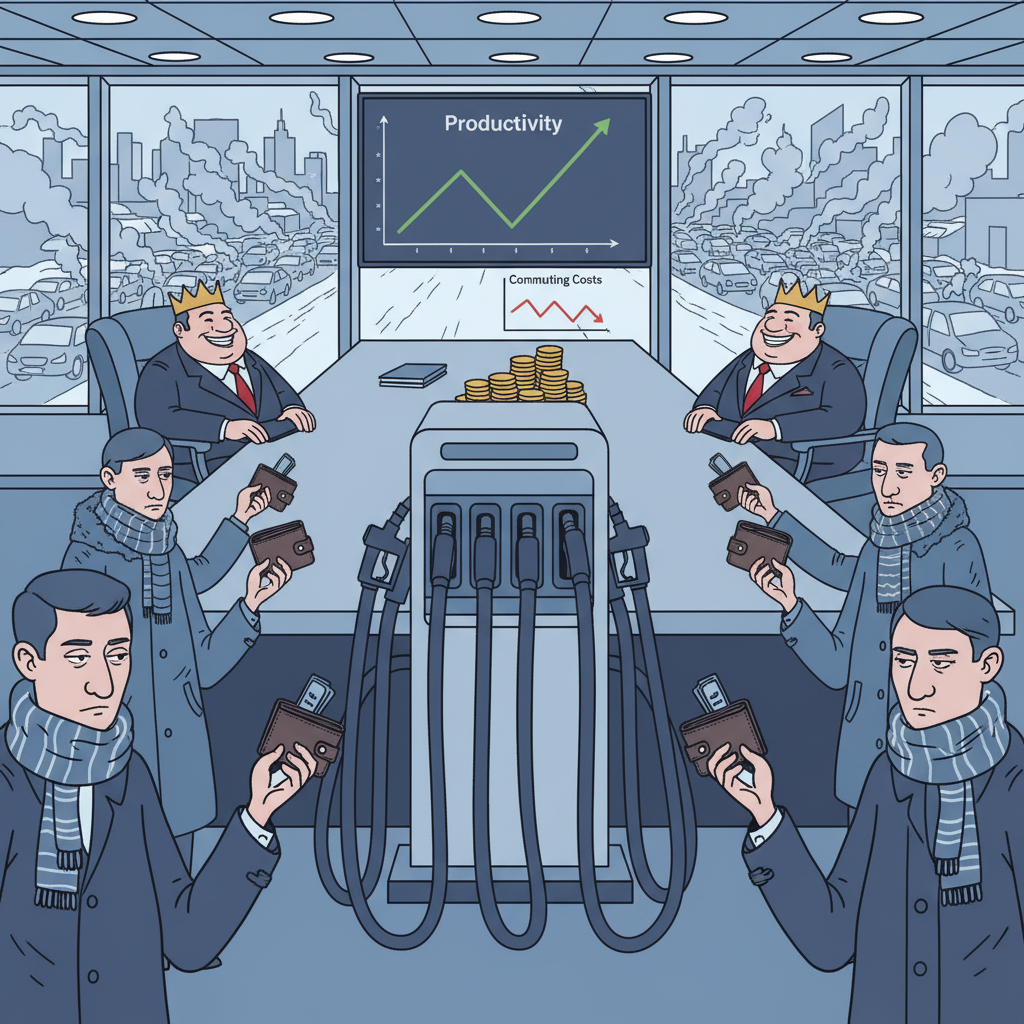
Meanwhile, we pretend winter weather and public health don’t exist. We came out of a global pandemic with clear evidence that remote work works, then immediately began rolling it back as if the experiment never happened. Commuting in ice, snow, and respiratory virus season is treated as a character‑building exercise rather than a predictable hit to safety, health, and sleep, despite research showing that longer commutes erode sleep and wellbeing in ways that directly affect performance. Control freaks memorized one set of archaic office rules in the 20th century and cannot function without forcing everyone else to live inside that script.
Now layer in gas prices. In the Greater Toronto Area, for example, fuel costs have climbed to around $1.55 per litre recently, with workers reporting that the price spikes are making everyday commuting “ridiculous.” A typical long‑distance commuter can easily burn more than $6,000 a year in gas alone, with total annual commuting costs, including wear and tear, insurance, and parking, climbing into the $15,000–$18,000 range. One HVAC worker in Toronto recently estimated spending about $200 every three days just to keep up with fuel, while wages are not keeping pace.
Return‑to‑office mandates shove those costs squarely back onto workers in a labour market that is already precarious. Studies on RTO consistently note that commuting expenses, time lost in traffic, and the rising price of fuel are among the biggest sources of resentment and “resenteeism”: people staying in roles but mentally checking out. At the same time, analysis of S&P 500 firms shows many companies rolled out RTO after their stock prices slumped, as a kind of theatrics to signal discipline to investors rather than to solve a real productivity problem. It is a symbolic flex that functions as a pay cut: more out‑of‑pocket costs and unpaid hours for employees, without a matching raise.

In other words, RTO was always a bad idea on the merits. The best available research says remote and hybrid work maintain or improve productivity, strengthen engagement when done right, and widen the talent pool. The same research says coercive RTO mandates raise turnover, damage morale, and disadvantage caregivers and women, again, with no clear upside for the bottom line. Rising gas prices just strip away the last veneer of respectability and make the power play obvious: companies and governments are asking workers to bankroll an outdated office culture that exists largely to keep a certain class of manager and a certain urban real‑estate model comfortable.
Who cares about winter weather? Who cares about health? Certainly not the people insisting everyone drag themselves back to cubicles while ignoring both the data and the price at the pump. If anything, the research proves what workers have been saying all along: RTO isn’t a productivity strategy. It is a control strategy. Gas prices simply turned up the volume on the truth.