
The Industry That Cleans Up After Power: How Media Rebrand Rage as Gravitas

Susan Delacourt’s vile logic rears its ugly head again.
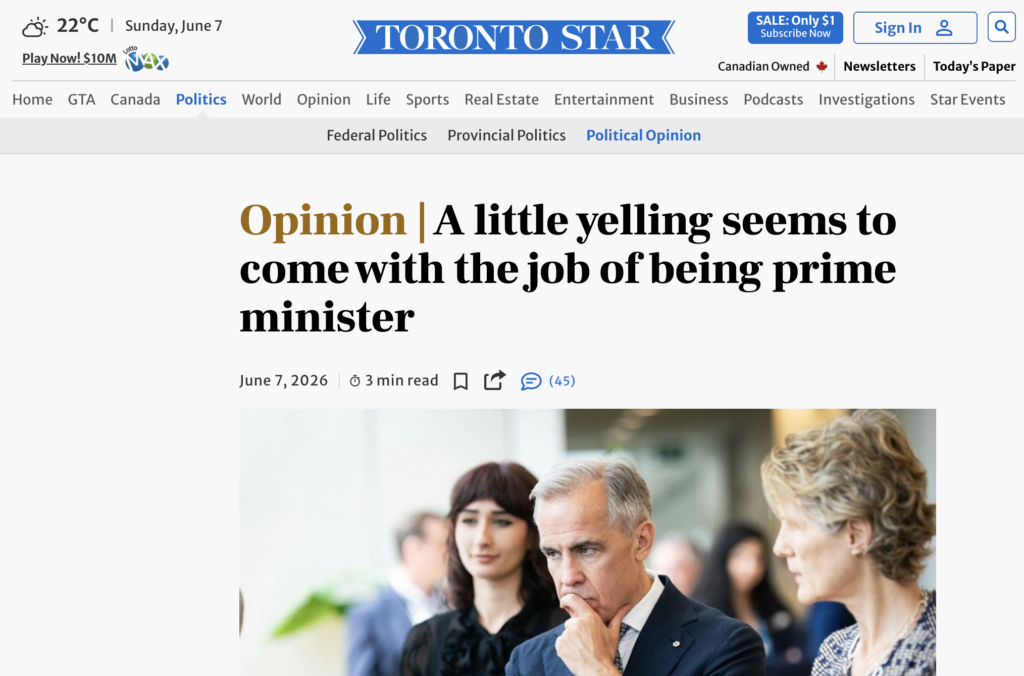
This is typical enabler logic. Prime Minister Mark Carney was caught using an unequal power balance to bully underlings, and Delacourt’s response is simply, well, other prime ministers did it; so it’s okay.
Nothing to see here, kids!
Sure. Some husbands slap their wives. They’re under stress, they work hard, they were provoked, and besides: he only does it once in a while. That’s the moral algebra of a “nothing to see here” defence, and it’s exactly the same equation Canadian media are now running for Mark Carney’s temper. We’re told that his volcanic flashes are just evidence of how much he cares, that grown‑up leadership comes with the occasional eruption, and that the responsible thing is to look past the bruises on the public record and focus on his plans. It’s abuse minimization with better tailoring.
Hooey.
If we wouldn’t tell a battered spouse “nothing to see here,” we shouldn’t let our press tell a battered public that about its leaders.
The article does a neat trick in three moves. First, it shrinks the damage: the prime minister doesn’t rage, he “bristles,” he “reacts testily,” his patience “wears thin” with unfair questions. The verbs are small and domestic, the sort of thing you might do in line at the supermarket, not from the dais of power. Second, it changes the subject. We’re told to judge him on his “big vision” and “serious plans,” not on the “human” temper that he “loses from time to time,” as if self‑control were an optional accessory rather than a job requirement. Third, it gifts him motive. His anger isn’t about entitlement or thin skin; it’s recoded as “frustration with dysfunction,” the righteous impatience of a man who cares too much to stay calm when lesser mortals slow him down. By the end, the outbursts haven’t gone away: they’ve just been refiled from “warning sign” to “colourful proof of leadership.
In short, it’s apologist propaganda.
Canadian punditry has spent the last few years distinguishing between “productive anger” and corrosive rage: anger at real injustice is allowed, even welcomed, as long as it leads to “real solutions” and stays within respectable bounds. But the clean‑up pieces quietly invert that standard. When ordinary Canadians are furious about housing, precarity, or violence, their anger is a “problem” to be managed with civic education and better manners. When a prime minister lashes out at journalists or critics, we are invited to see it as evidence of seriousness: a constructive impatience with the unserious. The content of the anger doesn’t change. Only the class position of the person who gets to express it without consequences does.
We recognize abuse apologism when it happens in a hallway, in a kitchen, behind a closed front door. We should recognize it just as quickly when it’s written in columnist prose about a man who has the power to sign orders, send troops, and decide which lives are expendable. If a neighbour told you not to worry about the shouting next door because “he’s under a lot of stress and he really loves her,” you wouldn’t call that nuance. You’d call it complicity. The media’s “nothing to see here” routine around elite tantrums works the same way: it teaches the public to absorb the blows and be grateful for the man who throws them.