The Bully and His Court: A Psychological Dossier on Abusive Power and Its Enablers

Overview
When a leader’s temper finally breaks through into public view, a hot mic, a leaked account, a caucus rebellion: the instinct is to treat it as a surprise. It never is. The explosion only surprises those who were not in the room. Everyone else, staffers, colleagues, journalists standing in the corridor, had long since learned to read the signs, to flinch before the outburst came, to stay quiet because the cost of speaking was too high.
This dossier examines the psychological architecture of abusive leadership: the specific traits that produce a bully in power, and the equally specific traits that produce the court of enablers around him. It draws on emerging evidence from the Canadian political context, particularly the premiership of Mark Carney, as a case study in what happens when explosive temperament combines with contempt for institutional limits. But the pattern is not uniquely Canadian. It repeats across politics, media, celebrity, and business with eerie consistency, because the conditions that allow it are structural, not accidental.
The flood of “we always knew” testimonies that follows every eventual exposure is not evidence that the truth was unknowable. It is evidence that it was known, and suppressed, by fear, by ambition, by the comfortable fiction that what everyone saw was not quite what it appeared to be.
Part One: The Profile of the Bully
Trait 1: Explosive Enforcement
The defining behavioural signature of the abusive leader is the use of anger not as an involuntary loss of control, but as a management tool. Yelling, public humiliation, contemptuous dismissal, and unpredictable outbursts serve a purpose: they establish that dissent has a cost, that questions are dangerous, and that the leader’s emotional state sets the room’s emotional rules. This is not passion. It is policy.
Research on abusive leadership defines the pattern precisely: a sustained display of hostile verbal and non-verbal behaviour directed at subordinates, ridicule, blame, intimidation, explosive anger, maintained over time, not as isolated incidents. The distinction matters because a single bad day is forgivable. A sustained pattern is a strategy.
In the Carney context: Reports of MPs describing the Prime Minister as yelling at caucus members and “punching down” at dissenters are not, in themselves, disqualifying, if isolated. The significance lies in their consistency: multiple independent sources, across multiple occasions, describing the same emotional register. That is not temperament. That is climate.
Trait 2: Boundary Contempt
Abusive leaders do not simply lose their tempers at people. They cross lines, professional, procedural, constitutional, with a fluency that suggests those lines were never real to them in the first place. Boundaries are experienced not as legitimate limits but as obstacles erected by lesser people to constrain superior will.
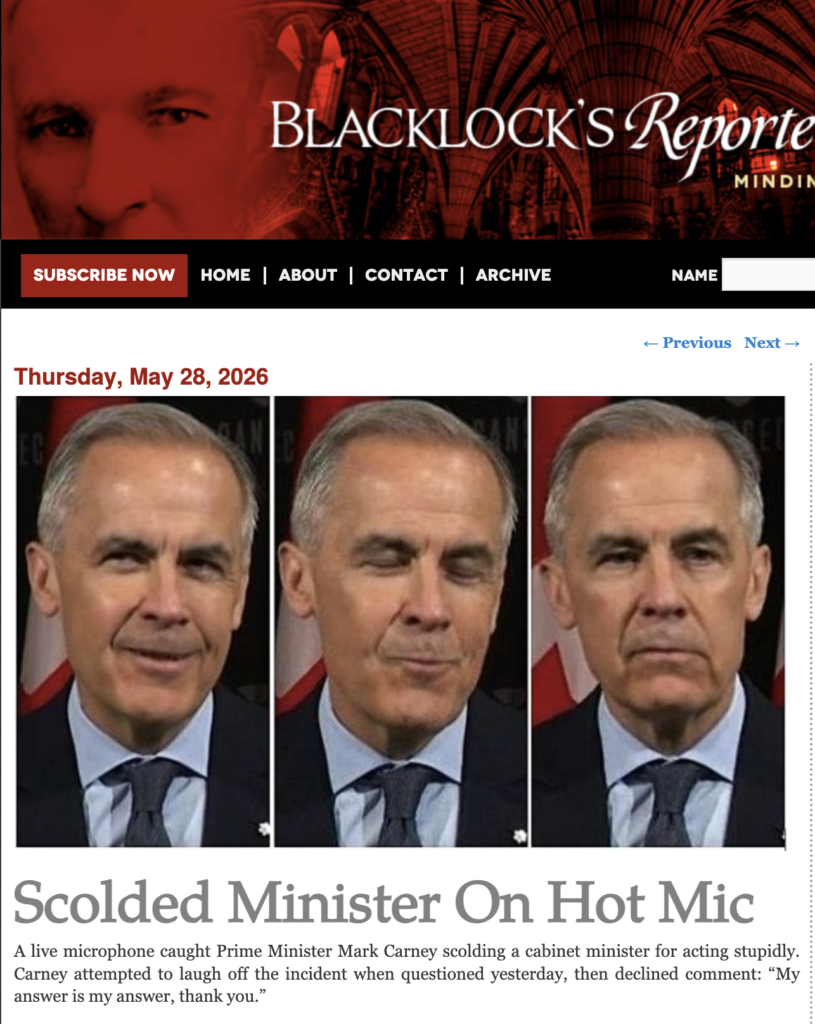
This manifests in two parallel registers. Interpersonally, it looks like ridiculing a minister on a live mic, demanding loyalty over competence, intruding on private spaces, and treating others’ time and dignity as expendable. Institutionally, it looks like treating the outcome of a democratic election, a minority verdict, as a bureaucratic inconvenience to be engineered away.
The key diagnostic: When someone who sets a limit is met not with negotiation but with fury, that fury is the tell. Psychology Today notes that people who habitually violate boundaries are precisely the ones most enraged when those boundaries are finally enforced. The rage is proportional to the entitlement.
Trait 3: Constitutional Cannibalism
This trait extends Boundary Contempt into the domain of democratic institutions. A leader exhibiting this trait does not accept the electorate’s verdict as a constraint on their authority; they reframe the result as raw material to be reshaped in their favour.
In April 2025, Canadian voters handed Mark Carney a minority government, an explicit signal that the public was not prepared to grant him unchecked power. Rather than governing within that constraint through negotiation and coalition-building, Carney proceeded to systematically recruit opposition MPs across party lines, manufacturing a de facto majority that the election had specifically denied him. Critics, including constitutional commentators, described this as a betrayal of the spirit of parliamentary democracy.
The behaviour maps directly onto what destructive-leadership research identifies as a defining feature of the toxic leader: an intense need for power used primarily for personal gain and self-aggrandizement, rather than the common good. The system is not respected. It is eaten.
Trait 4: Dark Triad Convergence
The three traits above do not exist in isolation. They converge in a psychological formation known in the leadership literature as the Dark Triad: narcissism, psychopathy, and Machiavellianism. Research identifies significant overlap between these traits, all sharing a manipulative and unsympathetic approach to people.
- Narcissism produces exaggerated self-importance, a refusal to accept limits, and an inability to tolerate criticism or constraint.
- Psychopathy produces impulsive decision-making, shallow emotional responses, and the absence of guilt for harm inflicted on others.
- Machiavellianism produces strategic manipulation of information and people, the rewarding of loyalty over competence, and the calculated undermining of anyone who might challenge authority.
When these traits appear in a leader who also holds significant institutional power, the result is not merely a difficult boss. It is a system redesigned around the protection and expansion of one person’s authority, at the direct expense of everyone else in the room.
Trait 5: Managed Façade
Perhaps the most dangerous element of the profile is its inconsistency. The abusive leader is not always abusive. They are charming when they choose to be, articulate under controlled conditions, and capable of presenting a compelling public image, the “steady hand,” the “technocrat,” the “crisis manager”.
Research on psychopathic traits in leaders finds that “Fearless Dominance”, boldness, composure, persuasiveness, is actually associated with better-rated leadership performance in the eyes of external evaluators. The public sees the façade. The caucus sees what is behind it.
This gap between public image and private behaviour is not incidental; it is functional. The façade allows enablers to rationalize (“he’s rough around the edges, but he’s effective”), silences internal critics (“if he were really that bad, surely someone would have said something”), and provides plausible deniability when the first leak appears (“it’s just one disgruntled MP”).
Part Two: The Court: A Profile of Enablers
Destructive leadership does not exist in a vacuum. It requires a court. Academic research frames this as the “toxic triangle”: three mutually reinforcing elements, the destructive leader, susceptible followers, and a conducive environment, that together create and sustain abusive power. The leader cannot do this alone.
The Conformer
Conformers are not true believers. They are afraid. Studies show that those who comply with toxic leaders in this category tend to have low psychological maturity, unmet needs, or low self-esteem, people who are more vulnerable to authority and more fearful of its consequences. They do not follow the bully because they admire him; they follow him because the alternative, dissent, exposure, retaliation, feels unsurvivable.
In a political context, the Conformer is the backbench MP who flinches at caucus meetings, who laughs at jokes they don’t find funny, who votes as directed and says nothing to journalists except “I have full confidence in the Prime Minister.” They are not cynical. They are terrified. And their terror is entirely rational: abusive supervisors do punish dissent, do freeze out critics, do create environments where raising concerns is reliably career-ending.
The Colluder
Colluders are something else entirely. They comply not out of fear but out of calculation. They have assessed the field and decided that proximity to the bully is the fastest route to their own advancement. They reward the leader’s need for validation, carry out acts of enforcement that the leader cannot be seen to do directly, and present a loyal face to the world while privately banking favours.
The floor-crossing MPs, those from other parties who crossed to Carney’s Liberals under a minority parliament, fit this archetype with precision. They were not deceived. They were not coerced. They made a choice: the minority verdict was a constraint on Carney, but it was also an opportunity for them, if they were willing to help engineer its circumvention. Colluders are not victims. They are partners.
The Caucus Chair
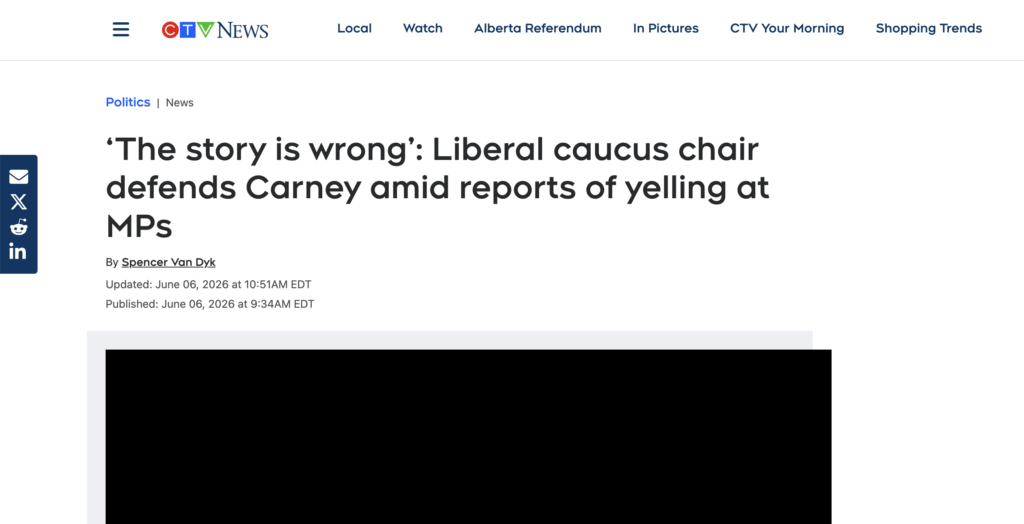
The caucus chair who publicly insists “the story is wrong” after multiple independent sources describe the same behaviour is performing a specific role in the abusive system. This is the institutional defender: someone with enough standing to be taken seriously, deployed to absorb media scrutiny, discredit witnesses, and reassert the official narrative.
Psychological research on abusive systems notes that institutional defenders are often people who have themselves been shaped by the abusive environment, they have internalized the leader’s framing so completely that they no longer experience the defence as dishonest. They genuinely believe the story is wrong, because within their bounded world, a world organized around the leader’s legitimacy, the alternative is unthinkable.
The Press in the Hallway
Of all the enablers, the most consequential and the least examined is the press. Reporters assigned to cover a powerful leader stand in those hallways every day. They hear things. They observe patterns. They receive tips, witness body language, and speak off-record to staffers who have been on the receiving end of the temper for months or years.
They write about the policy and the strategy and the polls. They describe the “volcanic temper” only when a foreign outlet runs the story first. They cover the hot mic because it is impossible not to, the audio exists. But for the behaviour that preceded the audio by years, they maintained a considered silence: out of access dependency (sources dry up if you file the wrong story), institutional risk aversion (editors spike stories that require high evidential standards and carry high legal risk), and a professional habit of treating the abuse of power as the sub-text rather than the text.
This is not neutral. It is a choice. And it makes the press not merely passive witnesses but active participants in the maintenance of the abusive system, standing in the hallway, knowing, and saying nothing.
Part Three: The Flood
When the first crack appears, a hot mic, a leaked caucus account, a whistleblower, the flood follows. Multiple witnesses, multiple incidents, a torrent of “we always knew.”
This is not coincidence. It is the mechanics of suppression releasing. The first public incident does several things simultaneously:
- It signals that the leader’s invincibility is dented, lowering the personal risk of coming forward.
- It provides a frame, a story already in motion, into which further testimonies can be placed, making each new account feel less like an isolated complaint and more like corroboration.
- It triggers institutional self-protection: the same organizations that once silenced complaints now commission investigations, position themselves as shocked, and compete to demonstrate that they “take allegations seriously”.
The flood is not new information. It is old information finding air.
For the journalists who covered the hallway, the institutional defenders who ran interference, and the colluders who smoothed the path, the flood represents an accounting. Each of them made choices. Each of those choices had a cost, paid by the people in the room who had no court to protect them.
Part Four: The Dossier in Motion: An Interactive Framework
This dossier is designed to be read not just as analysis but as evidence. The pattern described above, explosive temper, boundary contempt, constitutional cannibalism, a court of conformers and colluders, and a press that knew, is not abstract. It is visible, traceable, and documentable.
The Five Labeled Traits (Quick Reference)
| Trait | Core Behaviour | Diagnostic Signal |
|---|---|---|
| Explosive Enforcement | Anger as management tool; sustained hostile verbal/non-verbal behaviour | Multiple independent accounts of same behaviour across time |
| Boundary Contempt | Crosses interpersonal and institutional limits with impunity | Rage when limits are set; scolds, humiliates, intrudes |
| Constitutional Cannibalism | Treats democratic verdicts as raw material to be re-engineered | Manufactured majority from a minority mandate |
| Dark Triad Convergence | Narcissism + psychopathy + Machiavellianism | Rewards loyalty over competence; punishes dissent; manipulates information |
| Managed Façade | Maintains compelling public image while abusing in private | Gap between external ratings and internal testimony |
The Three Enabler Types (Quick Reference)
| Type | Motivation | Visible Behaviour |
|---|---|---|
| Conformer | Fear; survival; low exit options | Silence, compliance, performative loyalty |
| Colluder | Ambition; calculation; personal gain | Active enforcement, floor-crossing, information control |
| Institutional Defender | Internalized authority; identity fusion with leader | Public denial, credibility deployment, witness discrediting |
Reader Scoring: How Well Do You See the Stakes?
The following questions are designed to test whether readers can identify the patterns described in this dossier as they appear in real political and institutional life. The goal is not partisan: the same profile has appeared across parties, countries, and sectors. The goal is recognition, because recognition is the precondition for accountability.
Section A: The Leader
- When a leader publicly berates a subordinate and the institution responds by defending the leader rather than the subordinate, which dynamic is operating?
- a) Institutional loyalty, appropriate in a chain of commandb) The Managed Façade protecting itself through an Institutional Defenderc) A one-time misunderstanding being resolved appropriatelyd) Normal political friction
- A leader wins a minority government and then induces opposition MPs to cross the floor, achieving an effective majority without a second election. What does this represent?
- a) Political skill and effective coalition-buildingb) Boundary Contempt extended to constitutional normsc) A routine feature of parliamentary democracyd) Evidence of broad public support
- A leader is consistently described by internal sources as volatile and punitive, but external coverage focuses on policy competence. What explains the gap?
- a) Internal sources are politically motivatedb) The Managed Façade is functioning as designed, public performance diverges from private conductc) External journalists have better informationd) The behaviour is not systematic enough to merit coverage
Section B: The Enablers
- An MP from an opposition party crosses the floor to join a government that benefits from their defection. Which enabler type best describes this behaviour?
- a) Conformer: acting out of fearb) Institutional Defender: protecting the systemc) Colluder: acting out of calculation and personal gaind) Whistleblower: acting on principle
- A reporter has received multiple off-record accounts of a leader’s temper over eighteen months but has not published them. Which dynamic does this represent?
- a) Responsible journalism: waiting for on-record confirmationb) Passive bystander effect: diffusion of responsibility in the press galleryc) Active participation in the maintenance of an abusive systemd) Both (b) and (c) simultaneously
Section C: The Stakes
- When multiple sources come forward with accounts of abuse after a hot-mic incident, the most accurate interpretation is:
- a) The incident prompted false or exaggerated claims from political opponentsb) Old, suppressed information is finding air following a reduction in personal riskc) The incident was isolated and the response is disproportionated) The media is manufacturing a crisis
- The most powerful accountability mechanism against an abusive leader in an institution with weak oversight is:
- a) Internal HR processesb) Independent judicial reviewc) The press, when it chooses to use itd) Conformers gaining courage over time
Scoring Guide
7 correct: You read the room. You have the skills to work in accountability journalism, governance oversight, or institutional reform. You would not have stayed quiet in the hallway.
5–6 correct: You see the patterns but tend to give the institution the benefit of the doubt. Useful instinct for fairness; potentially costly when the institution is the problem.
3–4 correct: You are susceptible to the Managed Façade. You may be applying individualist frameworks to systemic behaviour. This dossier is specifically for you.
0–2 correct: You are either a Conformer or a Colluder. Either way, you already know which side of the door you stand on.
Conclusion: The Room Always Knew
Abusive power does not hide. It performs. It performs competence for the cameras and contempt behind closed doors, and it relies on the people in both rooms to maintain the separation.
What makes the Carney story significant, beyond partisanship, beyond one set of policy choices, is what it exposes about the ecosystem. The temper was known. The boundary violations were observable. The manufactured majority was, by definition, public. And yet the coverage, the caucus, and the cross-floor defections all proceeded as though these were separate, manageable facts rather than convergent evidence of a systemic problem.
The flood, when it comes, will not be new information. It will be permission to say what the hallway already knew.
The only question that matters is who decides when to give that permission, and why it took so long.
Additional Research by Perplexity.
One response to “The Bully and His Court: A Psychological Dossier on Abusive Power and Its Enablers”
[…] Play the Hallway Read the Dossier […]