What Buzzfeed and the Washington Post have in common

Jeff Bezos’s touching, child-like innocence rears its demonic head again.
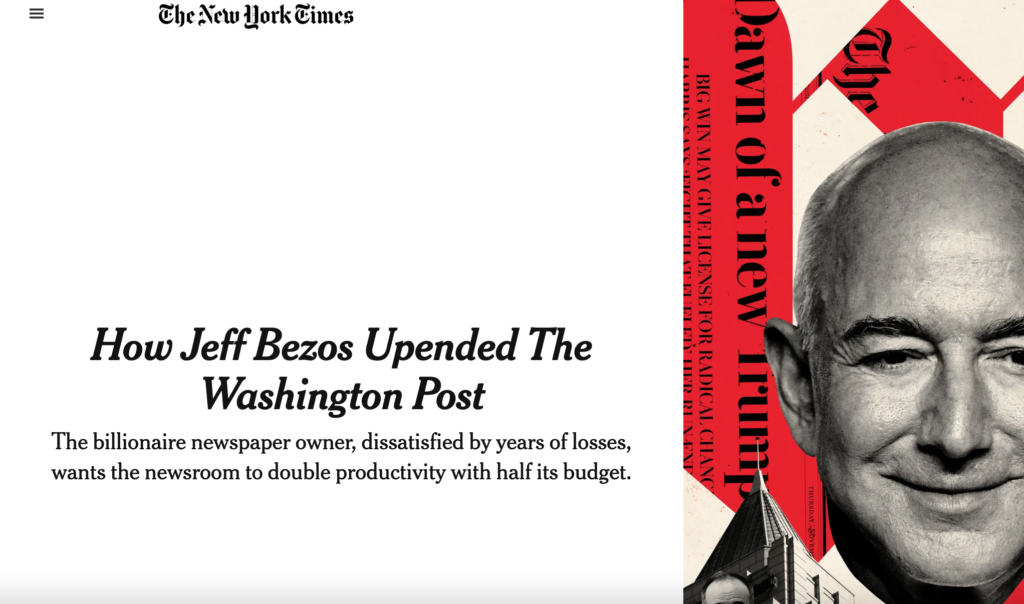
He wants a legacy newspaper to double productivity with half its budget?
Ha ha ha ha ha ha!
Memo to Jeff Bezos: That’s never gonna happen. You may want to live in Neverland, but Tinkerbell is booked solid for the next few centuries. Seriously?
That’s like demanding your granny win gold medals at the Olympics by taking away half her medications.
The average age of a newspaper reader is 55, even if you give away your product for free.
You know why?
It’s the same reason you went into the space ship industry and not the horse and buggy industry.
The Washington Post is a legacy media outlet. You know what that means?
A legacy singer can still tap their original fanbase with their old songs. They can’t sell new ones. They can’t gain younger audiences. Capisce?
Now, let’s apply that to the term legacy media. Do we have comprehension now, Jeff? You are not a magician. You are a mere mortal who lucked out with a wife that had a good idea at the right time and with a stepdad who had the money and the morals to pony up the funds you needed to make your business fly.
Buying the Washington Post was always a bad idea.
Look at Buzzfeed: it’s not going to survive: it’s younger, digital, and knew how to get attention and the right demographics in its heyday.
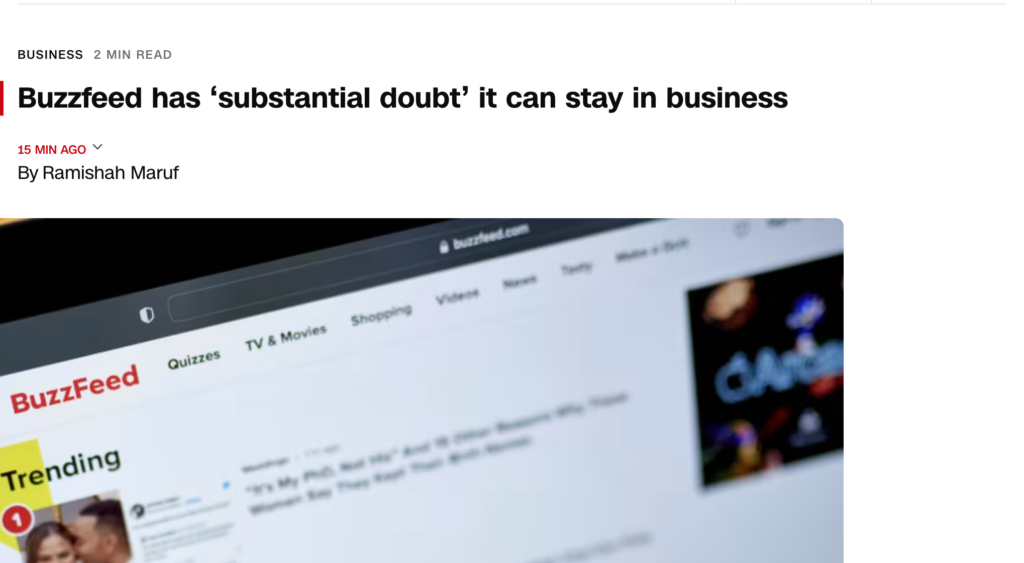
Once upon a time, Buzzfeed was the future of media.
But it is now a legacy digital outlet. It appealed to a certain demographic, and now the new generation have TikTok, Instagram, and Twitch that they can populate themselves. Buzzfeed can’t survive because it became stuck in the past, and its structure is baked in solid. Quizzes are passé. TV and movies no longer hold a new generation together. Shopping is hard when you lost your job and inflation and debts make buying designer trinkets undoable.
Those filler and advertising elements collapsed, and so did Buzzfeed’s audience because that reality no longer exists.
Perplexity had this to add:
This is the same company that was valued around $1.7 billion and held up as the model for digital news and entertainment when it IPO’d in 2021. It already shuttered BuzzFeed News entirely in 2023, despite its Pulitzer and serious investigations, because the “viral news” crown jewel couldn’t be made to fit the ad-driven, clicks-first corporate plan.
BuzzFeed was built on listicles, quizzes, pop-culture memes, and shopping-friendly lifestyle pieces engineered for peak Facebook, cheap credit, and affiliate-happy consumerism. Once platform traffic shifted, ad markets cooled, and commerce/affiliate revenues sagged, the architecture collapsed on contact with reality, because the entire operation was hard-wired for a very specific internet weather pattern that no longer exists.
Bezos now wants an actual legacy outlet to perform like BuzzFeed circa 2014 in a 2026 attention and economic landscape that has already eaten BuzzFeed alive. Yeah, not happening.
Jeff, you did not discover alchemy; you discovered scale in a monopoly-friendly moment and rode a logistics juggernaut your stepfather’s money helped you build. That does not make you a newsroom savant, it makes you a man who mistakes luck, timing, and other people’s expertise for personal genius. Demanding that a legacy paper double its output on half the budget is not vision, it’s a spreadsheet tantrum from someone who still thinks journalism is a warehouse he can “optimize” by firing the people who know where anything is.
Once upon a time, BuzzFeed was the future of media. Now it’s issuing “substantial doubt” warnings about whether it can even stay alive, after shuttering its Pulitzer-winning newsroom, selling off pieces, and watching the platform-driven, quiz-and-shopping fairy tale disintegrate on contact with reality. At the same time, the Washington Post is being gutted by the same kind of spreadsheet sorcery: hundreds of journalists tossed overboard, entire sections axed, a once-expansive mission squeezed into a narrower, cheaper, “more efficient” box.
BuzzFeed is what happens when you bet your entire nervous system on platforms and vibes; the Post is what happens when a billionaire confuses a legacy institution with a fulfillment center and decides the cure for structural decline is to saw it in half and whistle a happy tune. The “future of media” has already crashed into the wall, and the “paper of record” is now being ordered to drive the same car into the same brick, only faster, with less gas.
Yeah, not happening.