The Four Pests Campaign · 1958
A Government Declares War on a Bird
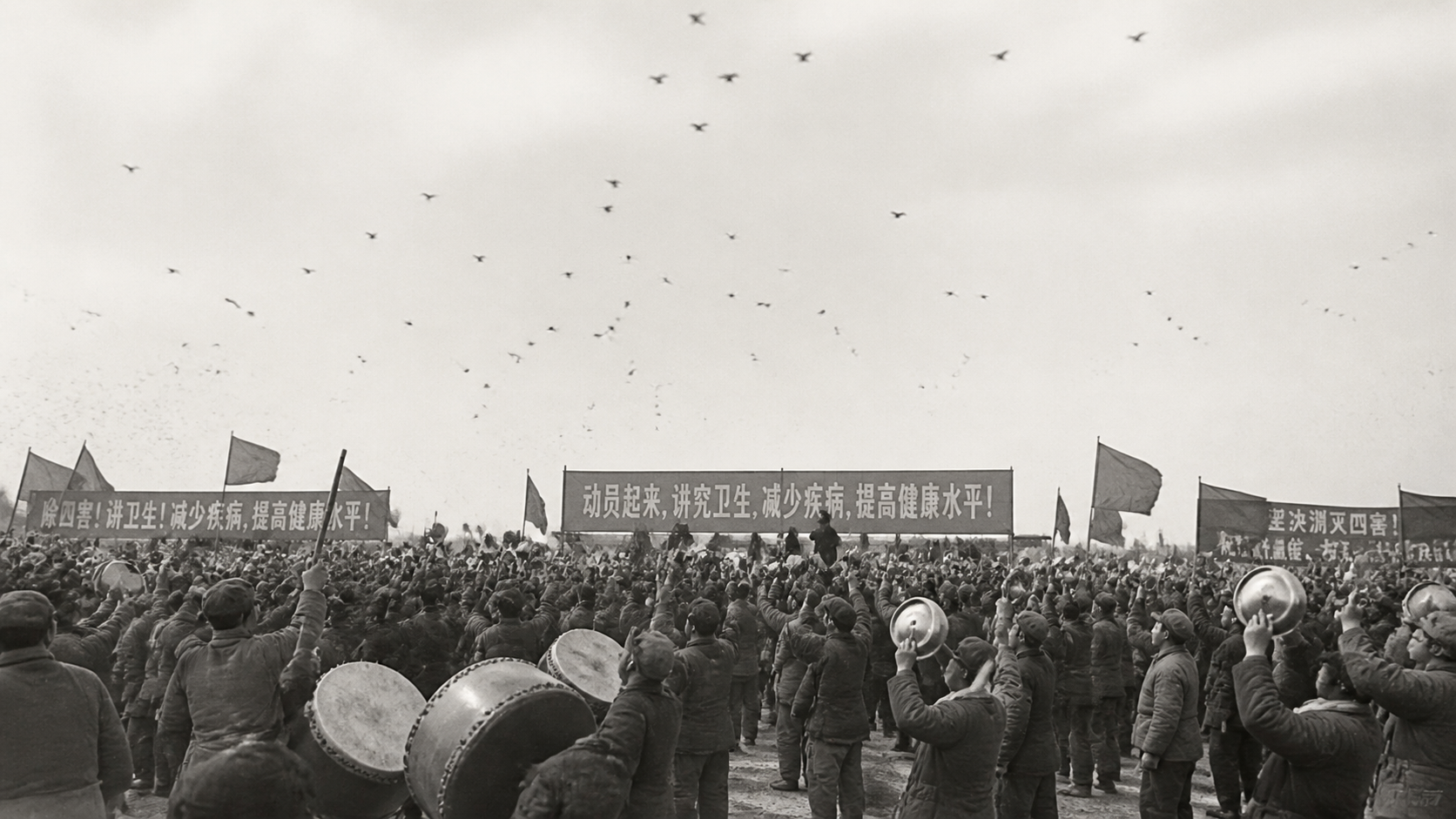
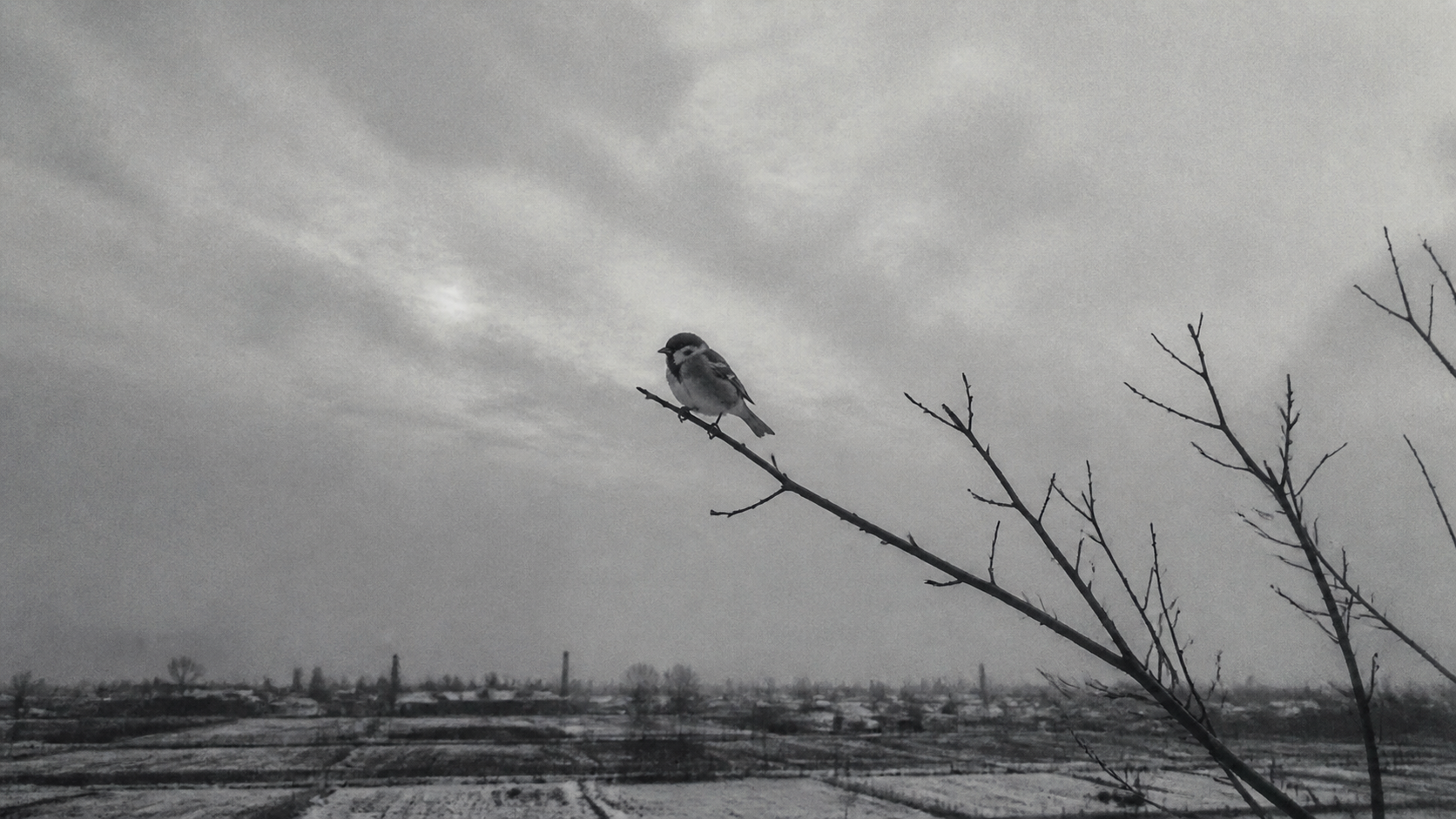
In February 1958, Mao Zedong launched the Four Pests Campaign (除四害, Chú Sì Hài). The targets: rats, flies, mosquitoes — and the Eurasian tree sparrow. The logic was brutally simple. Sparrows ate grain seeds. Kill the birds, save the harvest, feed the nation. The actual science Sparrows consume grain — but feed nestlings almost exclusively on insects during breeding season. Removing them eliminated the primary natural predator of locusts. Ornithologist Zhu Xi documented this before the campaign. He was ignored.
What followed was one of the most extraordinary mass mobilisations in human history. Citizens beat pots, drums, and pans — keeping sparrows in constant terrified flight until birds fell dead from exhaustion. Within two years, an estimated two billion sparrows had been killed.
Leading ornithologist Tso-hsin Cheng (Zheng Zuoxin) opposed the campaign publicly. He was declared a criminal. Biologist Zhu Xi referenced an 18th-century Prussian sparrowcide that had ended in agricultural catastrophe. Mao did not listen.
“The books didn’t say anyone died. But 32 people died in my village. The books blamed the famine on natural disasters. But I found no natural disaster.”— Shu Qiao, Folk Memory Project interviewer, Hunan Province, 2012
The Ecological Collapse · 1959
Without the Sparrows, the Locusts Came
The scientists were right. With sparrow populations decimated, locusts exploded across China’s farmland. A 2025 NBER study by economist Eyal Frank and colleagues — the first rigorous county-level quantitative analysis ever assembled — found sparrow-suitable counties experienced a 5.3% drop in rice yields and 8.7% drop in wheat yields. Sparrow eradication accounts for approximately 19.6% of the total reduction in national crop yields during the famine.
This ecological collapse intersected with forced collectivisation, the abolition of private farming, and redirected agricultural labour — producing the conditions for the worst famine in recorded human history. Yields in sparrow-suitable counties did not return to baseline until 1965, once bird populations had begun recovering.
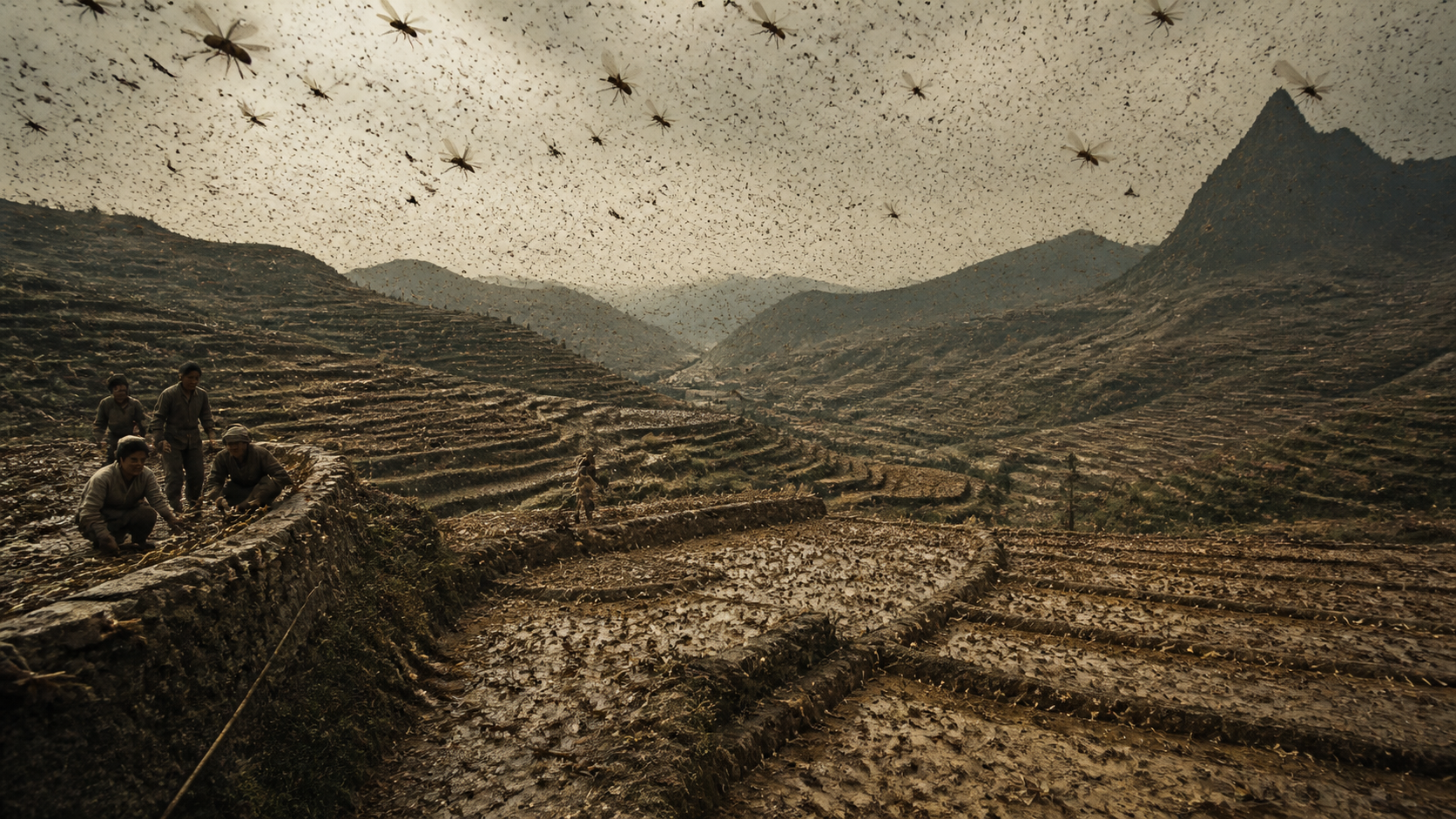
The locust surge of 1959: an ecological collapse enabled by eliminating the insects’ primary natural predator.
The Cover Story · 1960–1962
Three Years of Natural Disasters
As starvation spread, the CCP named it the “Three Years of Natural Disasters” — floods, droughts, and Soviet debt repayment. Local officials who reported food shortages were punished. The procurement system kept extracting grain from starving villages because officials had fabricated bumper harvest statistics the state now expected to be met. The information blackout The CCP controlled all media, statistics, and scientific publishing. No independent audit was possible. Governors who admitted shortfalls risked being labelled counter-revolutionaries. The blackout made the death toll invisible — even to senior leaders who had begun believing their own falsified numbers.
By 1960, sparrows were quietly removed from the Four Pests list. The government reportedly imported 250,000 sparrows from the Soviet Union — never announced domestically. Yang Jisheng, a Xinhua journalist whose father starved to death in 1961, spent twenty years secretly visiting provincial archives. His book Tombstone — still banned in mainland China — documented approximately 36 million deaths.
“Most of our history is fake. It is full of made-up stories to meet the needs of ideology. Once you realise you’ve been cheated, you’ll begin to pursue the truth.”— Yang Jisheng, author of Tombstone, BBC interview 2012