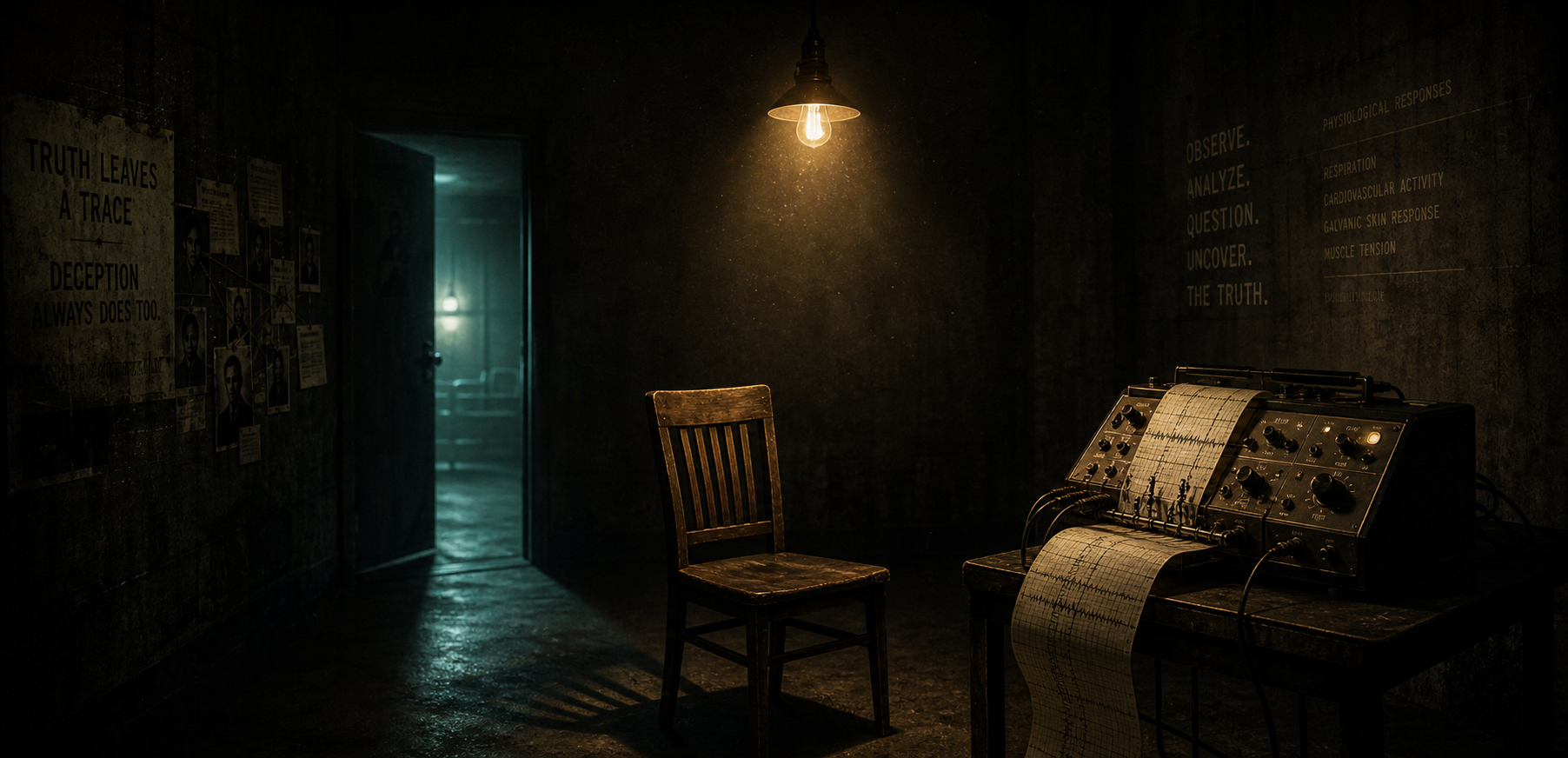
An interactive documentary
You Can't Out-Ask a Liar
Three panelists. Three stories. One truth. This is a case study in why watching someone answer questions almost never tells you if they're lying — and what actually does.
Scroll to begin ↓
Three panelists. Three stories. One truth. This is a case study in why watching someone answer questions almost never tells you if they're lying — and what actually does.
In an obscure late-1970s ABC pilot called Bamboozle, a civilian contestant and two celebrities questioned three strangers, each telling an outlandish story. Only one was true. Here's the panel from the episode you remember.
The panel's job: question each guest, then vote on who is telling the truth. Getting it wrong means the liar walks away with the prize.
A civilian claimant with no obvious "runner" look. The contestant believed him anyway.
The celebrity panelists sided with her — a warm, plausible-sounding story.
Tanned, blonde, athletic — he looked exactly like a surfer. Everyone assumed that meant he was performing a role, not living one.
The panel didn't fail from lack of effort. They asked real questions. They just optimized for the wrong signal: does this person look like their story, not is their story checkable.
Read each testimony the way a panelist would — no records, no follow-up, just how they present. Make your call.
Deception research consistently finds untrained observers hover near chance — about 54% — when judging truth from behavior alone. These four techniques are the documented exceptions.
Withhold what you already know, let the person commit to a story, then reveal the evidence. Liars who don't know what you have often contradict themselves.
Separate checkable claims ("I clocked in at 9am") from unverifiable ones ("I was alone at home"). Truthful accounts lean toward the checkable.
Ask someone to narrate events backward. Genuine memories hold up under the extra cognitive load; rehearsed stories start to crack.
Compare independent accounts against each other and against records, timestamps, and receipts — not against how confident someone sounds.
Re-read Act Two's testimonies, but this time ask: what part of this story could I actually check?
Replay the panelWrongful convictions, workplace fraud, and financial scams share a pattern: confident interviewers making a snap read, then defending it instead of checking it.
Investigators trained to read "guilty behavior" have produced false confessions later overturned by DNA and records — the same stereotype-matching that convicted the surfer.
Scandals often unravel years late because the person who "looked" trustworthy was never cross-checked against paper trails, timestamps, or third-party records.
True-crime storytelling frequently nudges viewers toward a suspect based on demeanor on camera, mirroring exactly the panel bias this documentary is built to expose.
The instinct-only approach fails identically in ordinary situations — a job interview, a first date, a handshake deal — wherever there's no habit of checking.
The panel in that old pilot wasn't unusually gullible — they were doing exactly what most people do: reading a person instead of checking a fact. The fix isn't sharper instincts. It's slower ones, paired with something outside the room that can confirm or contradict what's being said.