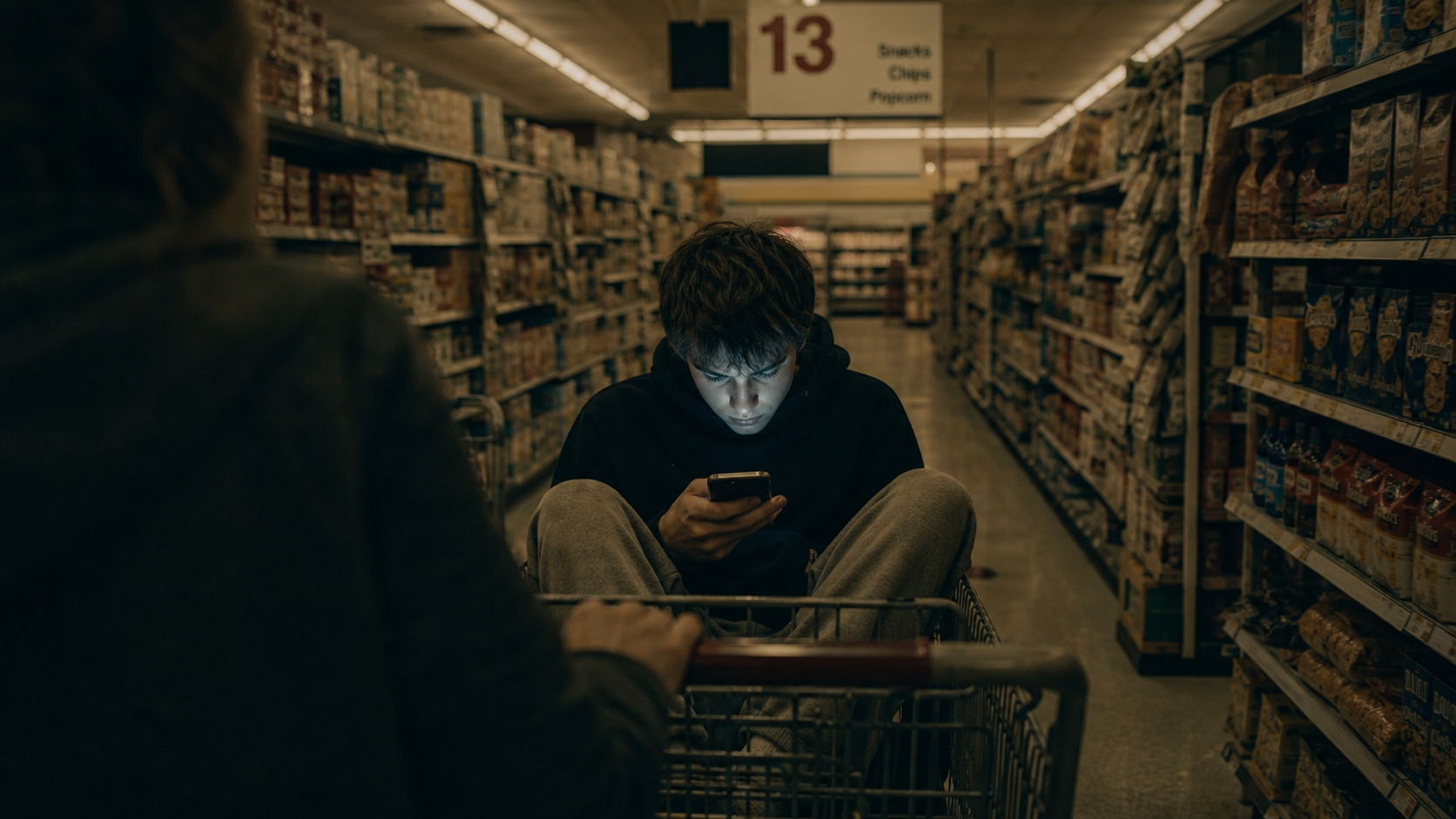
Across grocery aisles and big-box stores, a quiet ritual is spreading: parents and grandparents pushing teenagers — well past toddler age and the cart's intended rider — while the teen stares into a phone, disconnected from the cart, the caregiver, and the risk beneath them.
Shopping carts were engineered — and repeatedly redesigned — around one core risk: falls and tip-overs from unrestrained children. Smartphones were engineered around one core outcome: sustained attention capture. Put a phone in a teenager's hand inside a moving cart pushed by a distracted adult, and both systems' failure modes activate at once.
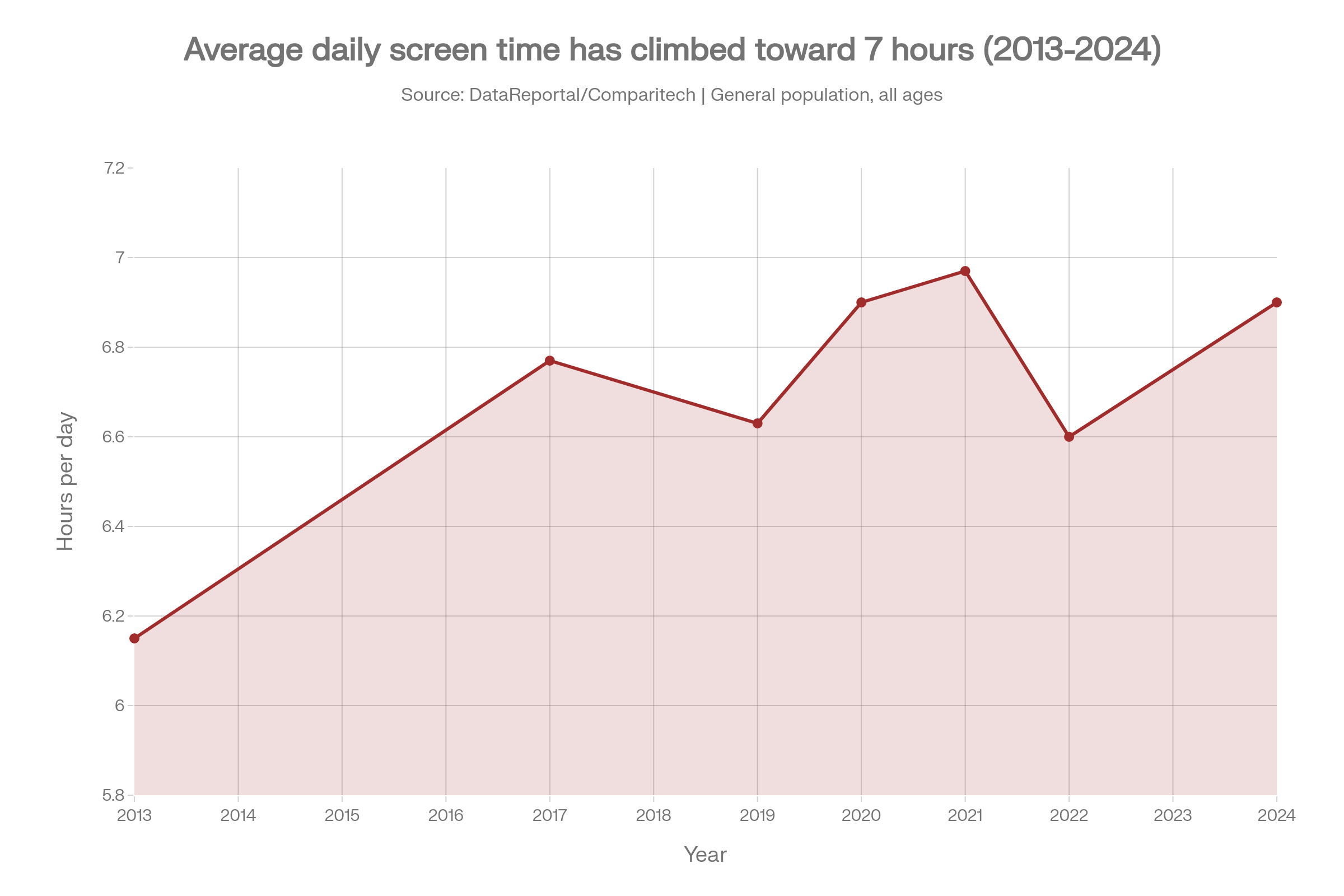
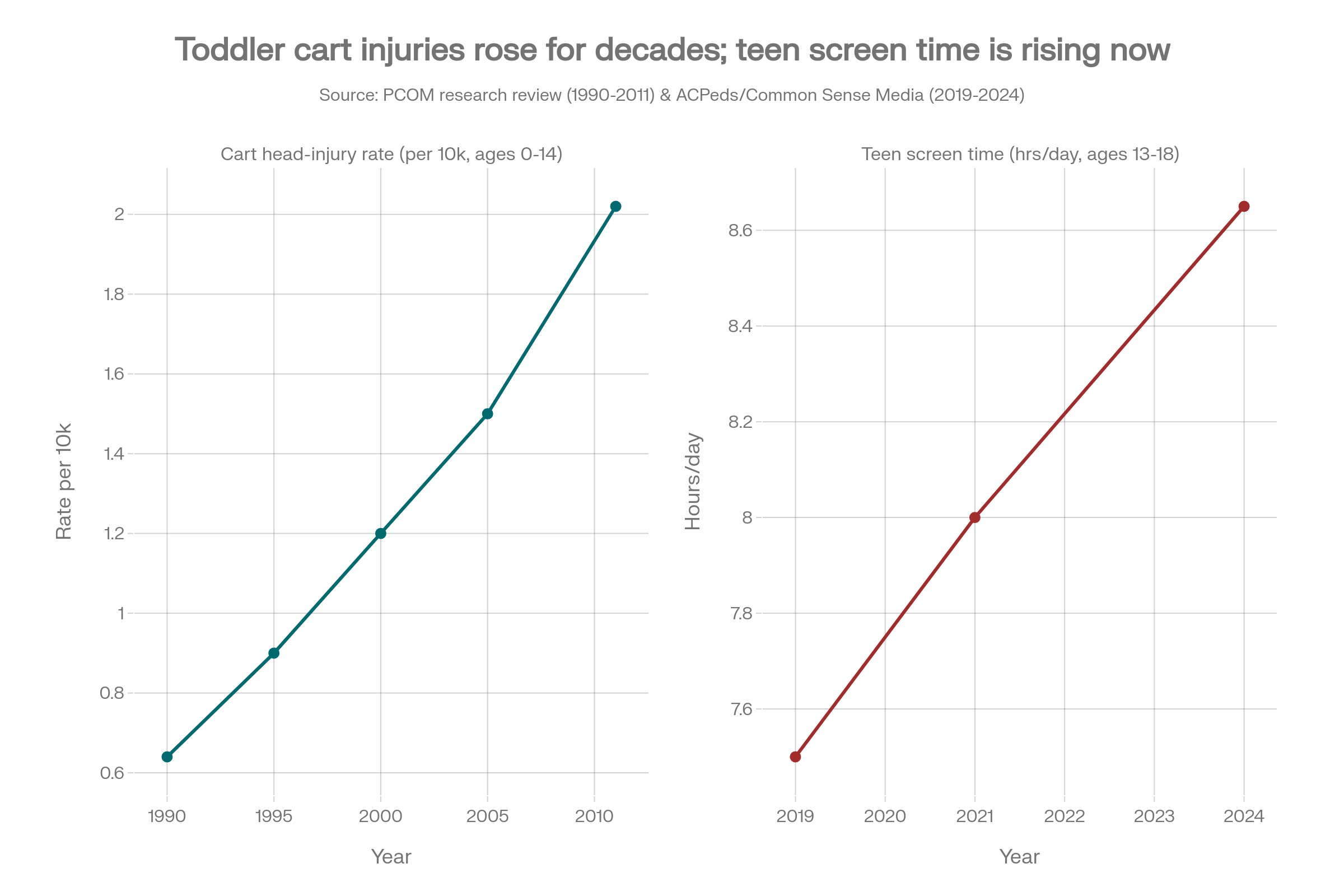
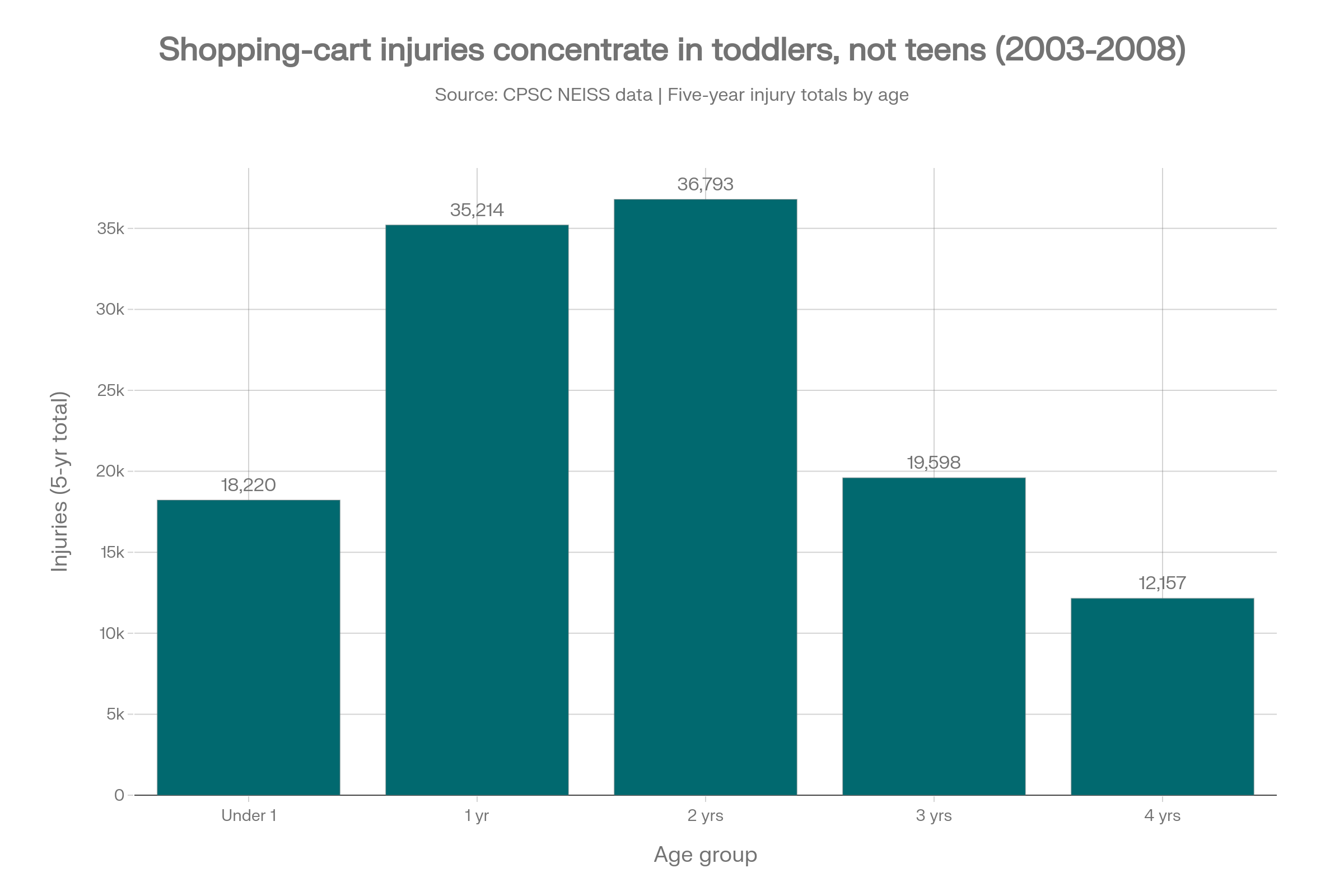
Cart injury data has always centered on toddlers — the riders the equipment was designed for. Screen-time data tells a completely different story: it is teenagers, not toddlers, whose device use has climbed steadily for over a decade. The "cart kid" trend puts an adolescent body, sized for neither the cart nor the caregiver's blind spot, into a system built around neither risk.
This is a simplified, illustrative model — not a clinical instrument — built to show how attention shifts as screen absorption rises. Drag the slider to see how a caregiver's awareness of the cart changes as the teen (and often the adult) sinks deeper into a phone.
Smartphone apps are built around variable-reward loops that trigger dopamine and reward pathways similar to substance-dependence patterns, making it hard for a teen to disengage even briefly.
Falls account for over half of cart-related injuries, and tip-overs — common when weight sits above the intended limit — cause up to a quarter more, concentrated in head and neck trauma.
Experts describe adult modeling as central to the problem: caregivers on their own phones lose the split-second reaction time needed to catch a cart before it tips.
Two independent trend lines, visualized side by side: toddler cart-injury severity climbing for two decades, then teen screen time climbing over the past several years. Neither trend was caused by the other — but they now overlap in the same aisle.
None of this requires banning phones outright — it requires restoring the seconds of attention a moving cart actually needs.