Nose, meet face.
Face, meet tariff.
A dramatic reenactment of a man who declared economic war on his closest neighbour, then discovered — much to everyone's surprise but his own — that the neighbour sells the syrup, the lumber, and roughly a third of the electricity.
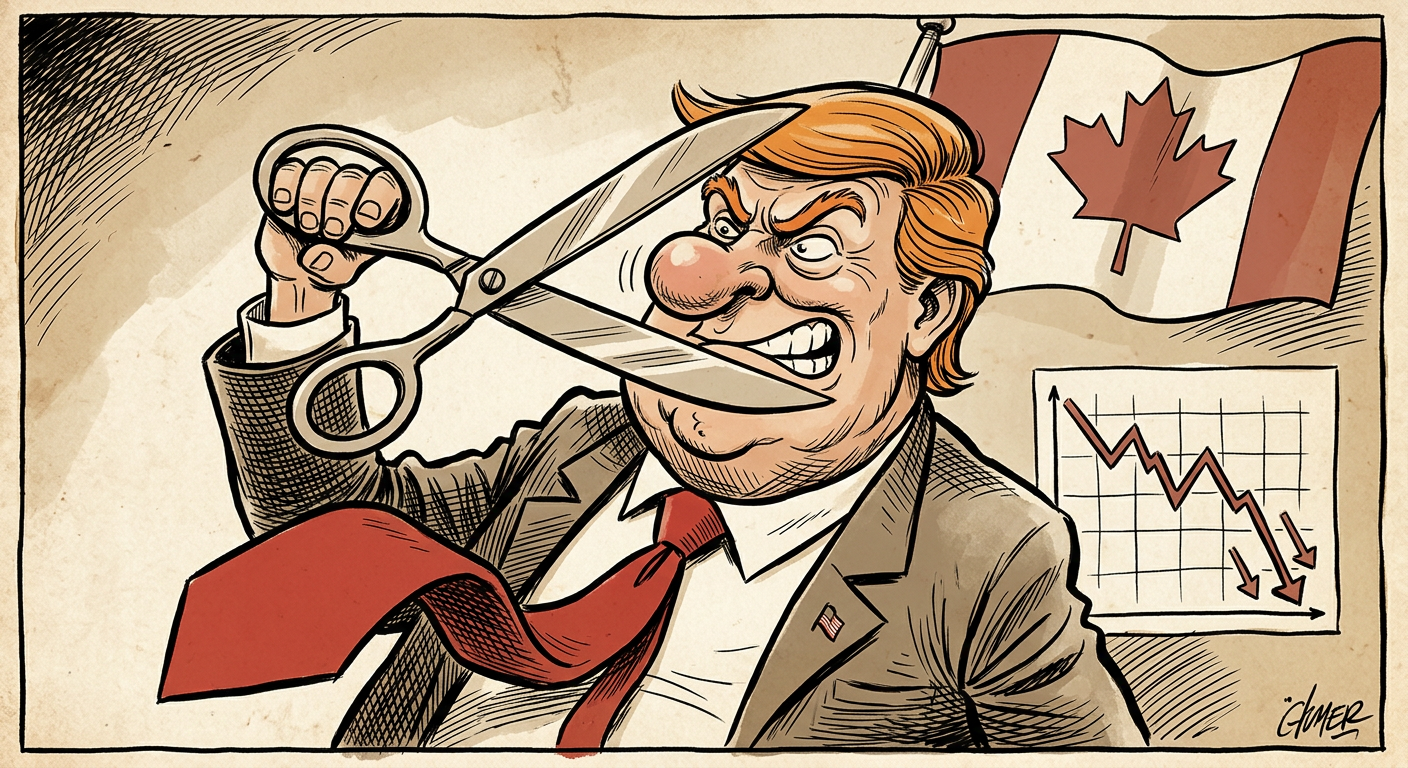
Artist's rendering. No noses were actually harmed. The economy, on the other hand...
Case File No. 51
Symptoms of Self-Rhinectomy
-
Exhibit A: The Tariff Boomerang
Slaps a tariff on a neighbour who supplies your steel, your potash, and your Tuesday morning coffee cream. The neighbour slaps back. Everyone's grocery bill absorbs the recoil.
-
Exhibit B: The Retaliation Reflex
Insists the other side "needs us more than we need them," a theory tested approximately never, because testing it would require reading a supply chain map.
-
Exhibit C: The Victory Lap
Declares total triumph while the currency, the stock ticker, and several furious farmers quietly disagree in the background.
Diagnosis
Medically speaking, cutting off one's nose to spite one's face is inefficient: it solves nothing, disfigures the patient, and leaves the face conspicuously worse off than before the spite began. Economically speaking, it's roughly the same procedure, except the nose is a supply chain and the face is a national economy that still needs to breathe.
Trade wars, like nose removal, tend to be irreversible in ways the person holding the scissors rarely anticipates.
The Procedure
A Timeline of Self-Inflicted Wounds
A neighbour is blamed for decades of complex global manufacturing trends, because blaming a country that sends you maple syrup and hockey players polls better than blaming supply and demand.
Tariffs are announced with theatrical flourish, aimed squarely at the face, on the theory that the nose will simply apologize and grow back bigger.
The neighbour, unmoved by theatrics, retaliates. Exporters on both sides discover their orders have vanished. The face notices it is now breathing through a gap where a nose used to be.
Reporters ask about rising prices. The response involves the word "winning," repeated with the confidence of a man who has not looked in a mirror lately.
Supply chains reroute permanently. Buyers who left don't always come back, because it turns out trust, once amputated, doesn't simply reattach itself.
The Bill
Itemized Receipt for One (1) Missing Nose
| Item cut off | Intended target | Actual casualty |
|---|---|---|
| Steel and aluminum tariffs | Foreign competitors | Domestic manufacturers who buy the metal |
| Retaliatory tariffs on exports | Political leverage | Farmers and producers who lose their buyer |
| Energy and lumber levies | "Winning" the negotiation | Home heating bills and construction costs |
| Cross-border consumer boycotts | Sending a message | Tourism towns on both sides of the border |
| National pride, several helpings | Looking tough | A face with no nose left to smell the coffee |
"I don't need the nose. The nose needed me. Everyone agrees the face looks stronger without it. Tremendous face. Best face."— A statement no sensible person actually made, but you can hear it anyway
Moral of the Satire
Spite is not a trade strategy. Neither is a nose, once it's gone.
More Editorial Satire at KlueIQ