His Majesty Fears the Dinosaur in the Tutu
While self-appointed AI oracles don crumpled paper crowns and declare doom over stick-figure image generators, enterprise IT departments are quietly doing something far less photogenic: tearing down decade-old data silos.
A widely shared piece warning that AI "could pose an existential risk" recycled the same 2022-vintage talking points that predate the actual enterprise AI boom. Meanwhile, the people who write the checks are asking a much duller question: why can't finance and supply-chain systems talk to each other?
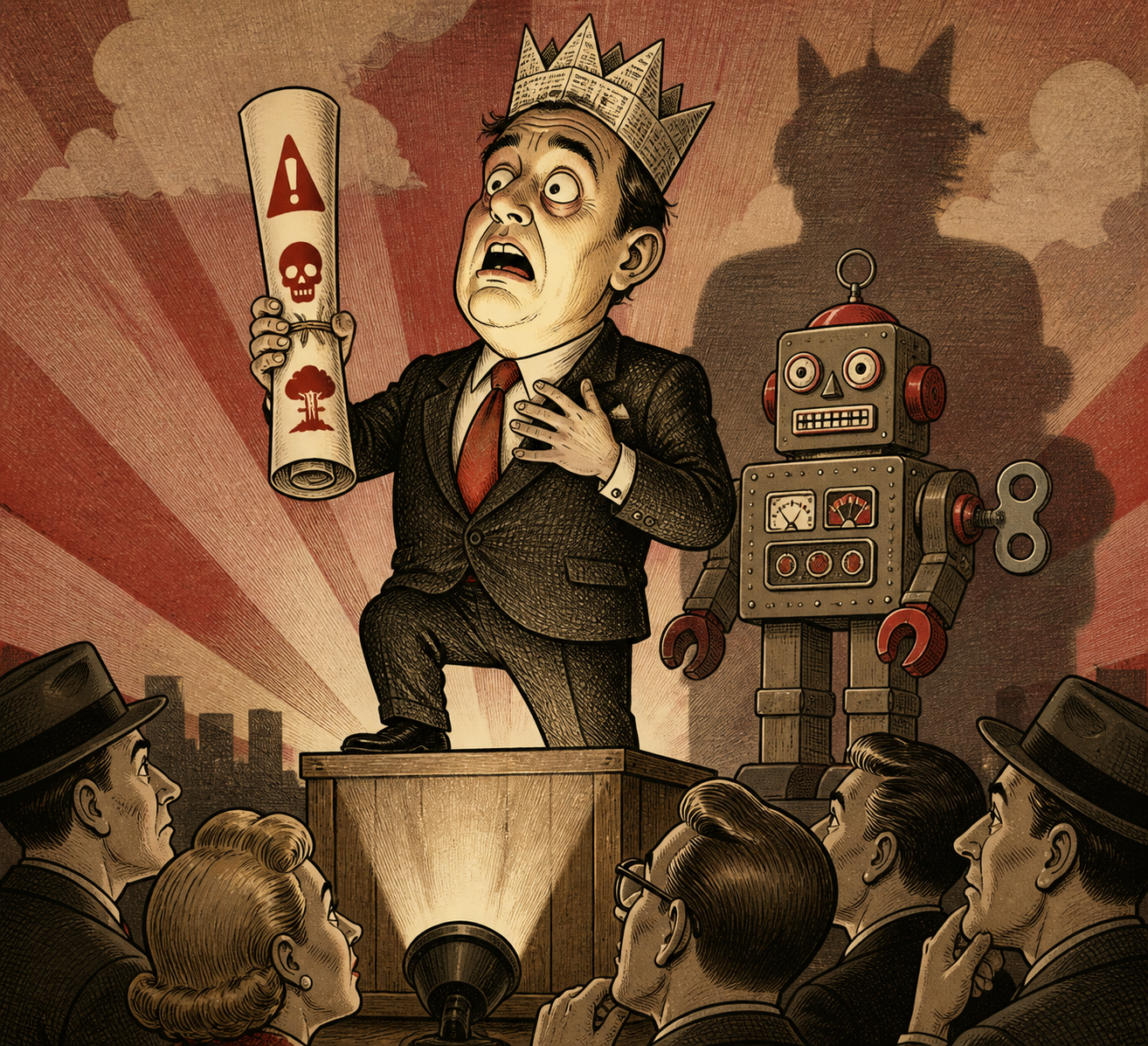
The Crown Ledger: Ranking the Realm's Alarmists
A completely unscientific, entirely deserved rating of how many paper crowns each doom pronouncement has earned, based on how far the claim strays from anything resembling a citation.
| Pronouncement | Evidence Offered | Vintage of Argument | Crowns Awarded |
|---|---|---|---|
| "AI could pose an existential risk to humanity" | A press release and a shudder | 2022, reheated | 👑👑👑👑👑 |
| "Chatbots will replace all writers by Tuesday" | One viral screenshot | 2023 | 👑👑👑👑 |
| "We need an immediate global pause" | An open letter, since quietly walked back by several signatories | 2023, still touring | 👑👑👑 |
| "Enterprise adoption is stalling because of ROI, governance, and legacy data architecture" | McKinsey, NBER, and every CIO surveyed | 2026, current | 👑 |
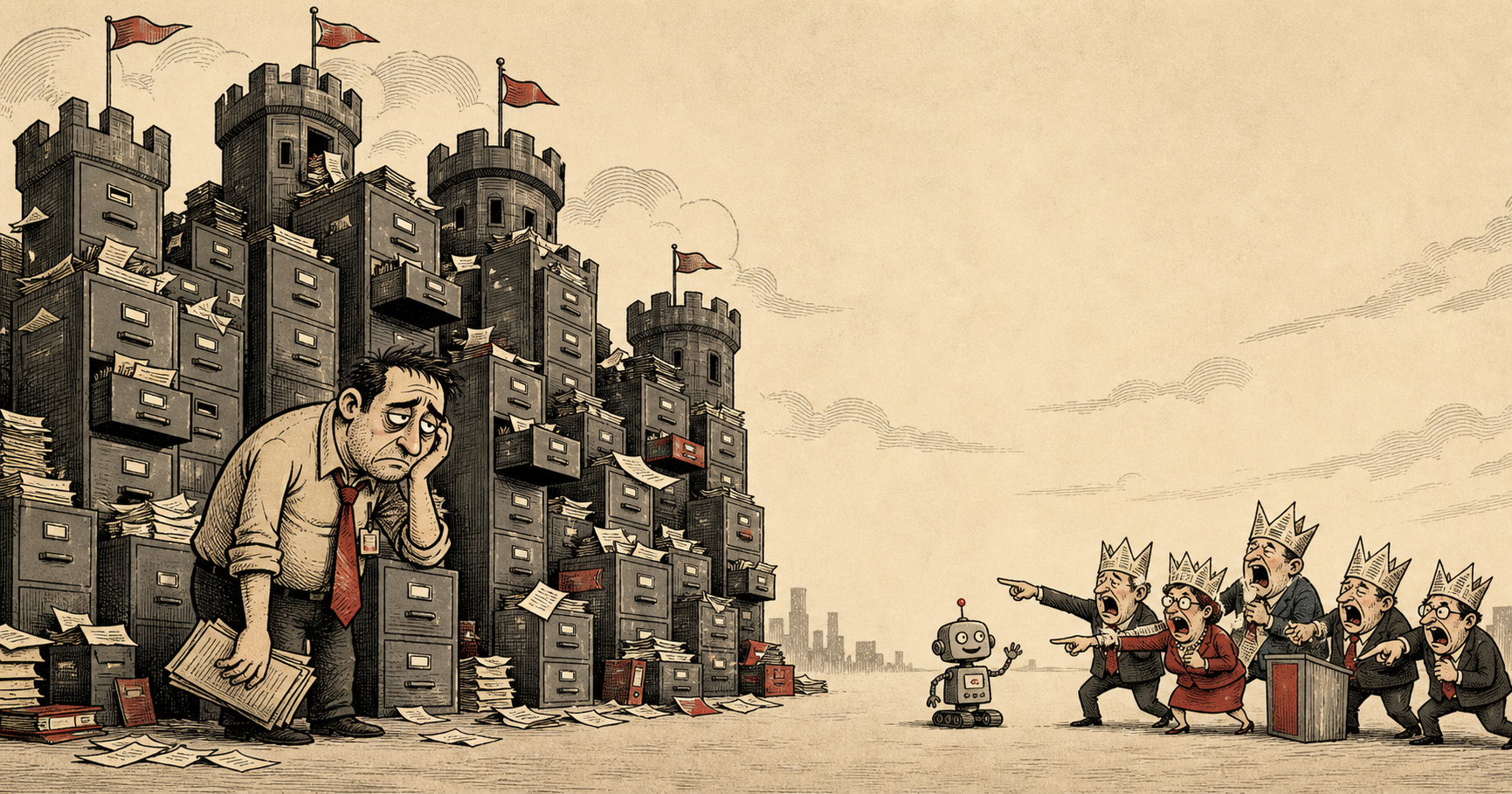
What the Headlines Say vs. What the Researchers Actually Measured
Same subject, two entirely different registers. One is written to be shared. The other is written to be checked.
"AI could pose existential risk to humanity."Headline framing, syndicated political coverage
"Mitigating the risk of extinction from AI should be a global priority alongside pandemics and nuclear war."One-sentence open statement, widely quoted with no probability attached
"The negative impacts of AI get a lot of attention but why are you not uneasy?"Typical framing in online AI-doom discourse
Individuals within the same expert group differ by up to roughly 11 orders of magnitude on AI extinction-risk estimates.Forum analysis of existential-risk survey spread, 2026
78% of AI researchers agree catastrophic risk deserves concern — but many surveyed were unfamiliar with the specific safety concepts they were rating.Survey of 111 AI professionals across academia, industry, and safety research
Near-term forecasting accuracy shows no meaningful relationship with long-term x-risk estimates.Cross-group forecasting validation study, 2026
"Enterprise users aren't asking their AI for a dinosaur in a tutu. They're asking it to find the invoice that's been trapped in three departments since 2019."
— Overheard at literally every IT strategy meeting, 2026What Enterprise AI Buyers Are Actually Asking For
Not sentience. Not a robot uprising. Access to their own data, in one place, without six approval emails.
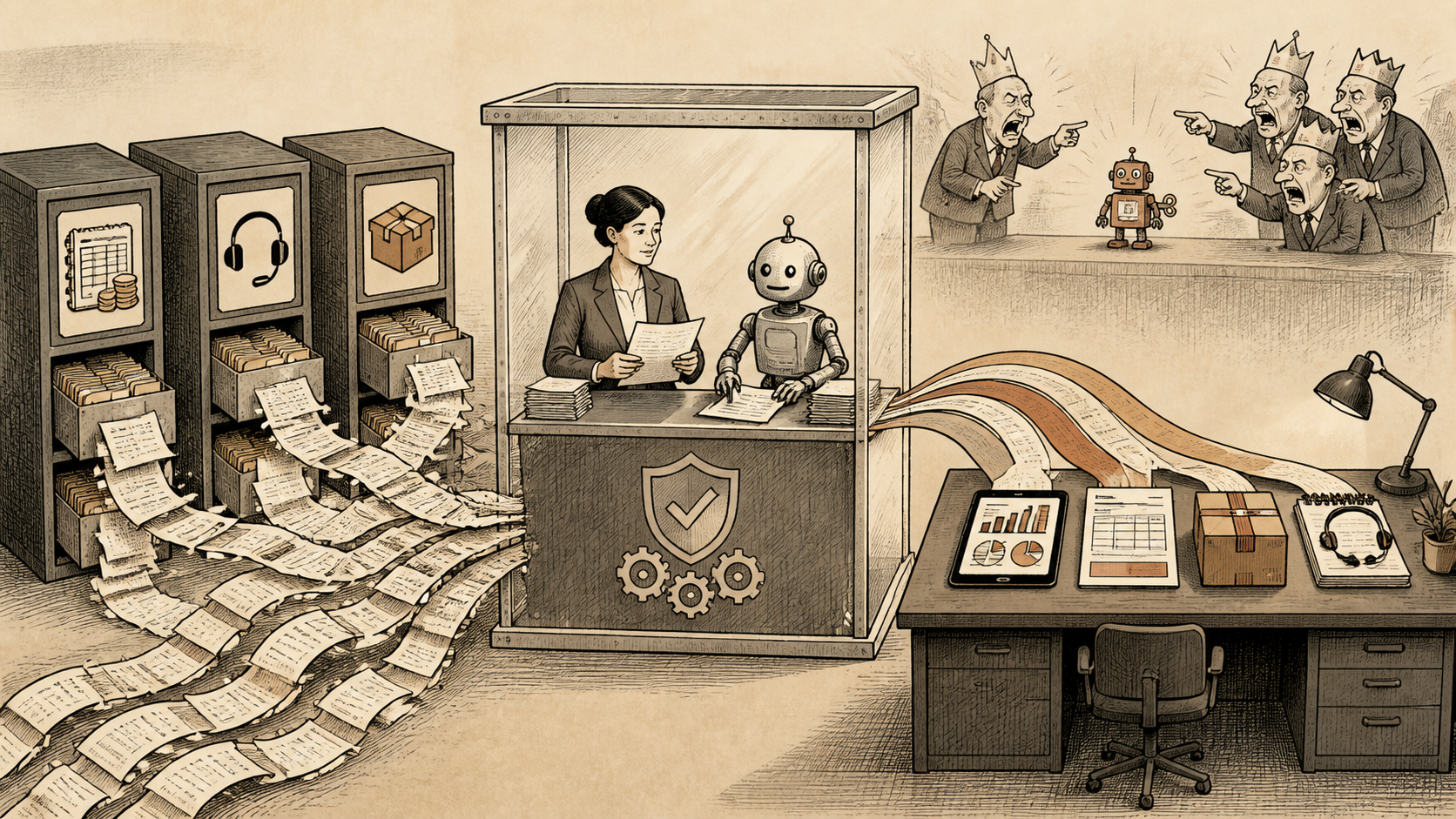
Dismantling Data Silos, Not Building Skynet
Leaders are enabling modular, cloud-native platforms that securely connect, govern, and integrate all data types — breaking down silos with domain-owned data products instead of waiting for a superintelligence to show up.
The Productivity Paradox No Pundit Mentions
91% of firms now use AI in at least one business function, yet an NBER survey found 89% of managers saw no measurable productivity change over three years — not because AI failed, but because most deployments never got past the pilot stage.
Agentifying the Unglamorous Workflow
Real enterprise strategy in 2026 looks like identifying a handful of high-value, end-to-end workflows worth automating, modernizing the underlying data layer, and building governance for human–agent collaboration — not drafting a moratorium on thought itself.
Identify high-impact workflows → modernize data architecture → enforce data quality → build agent governance
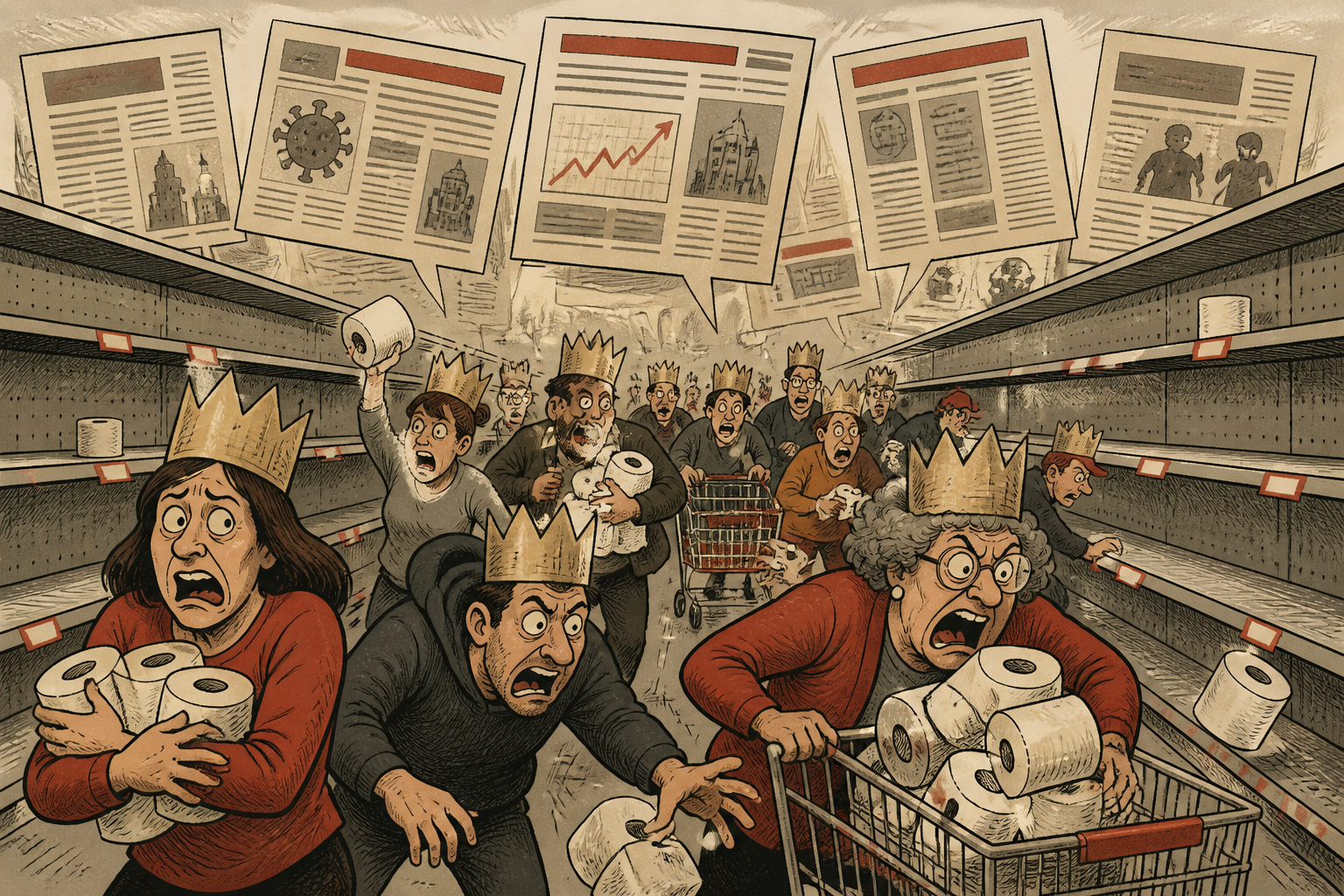
The Toilet Paper Test
Before there was AI doom, there was an entire nation fighting over 12-packs of two-ply. History offers a controlled experiment in exactly this kind of panic — and the receipts are unflattering for the alarmists.
How the Test Works
Strip away the panic imagery and the viral framing. Ask: is there a stable, falsifiable claim underneath — or just a self-reinforcing cascade of people reacting to other people's reactions?
-
Step 1 — Find the Trigger Image
Empty-shelf photos, not actual supply data, drove the 2020 panic; researchers found media coverage of the phenomenon was the primary amplifier, not scarcity itself.
-
Step 2 — Check Who's Reacting to Whom
Behavior spread through information cascades: people copied others' buying, assuming others had insider knowledge, which manufactured the very shortage the headlines warned about.
-
Step 3 — Compare Fear to the Actual Risk
Toilet paper offered no special protection against the virus, yet it became the flashpoint — fear correlated weakly with real disease risk and strongly with sensational imagery.
-
Step 4 — Note the Disclaimer Nobody Reads
A Canadian media analysis found outlets explicitly told readers stockpiling was unnecessary — the alarming headlines and images still drove behavior anyway.
Applying the Test to AI Doom Coverage
| Toilet Paper Panic (2020) | AI Existential Risk Coverage (2022–2026) |
|---|---|
| Empty-shelf photos triggered panic buying independent of real supply data | Viral one-line open letters trigger alarm independent of probability estimates or methodology |
| Media reporting the phenomenon amplified it, even while telling people not to panic | Outlets cite the "existential risk" framing while researchers show wildly inconsistent risk estimates underneath |
| Behavior driven by copying others' fear, not evaluating scarcity firsthand | Policy alarm driven by citing other alarmed public figures, not evaluating the underlying technical claims |
| Fear correlated weakly with actual disease risk, strongly with sensational imagery | Public alarm correlates weakly with expert consensus on near-term capability, strongly with dramatic framing |
Verdict: Fails the Test — like the 2020 shelf photos, the confident urgency of the coverage isn't backed by anything close to expert consensus.
Filed Under: Illiteracy, Not Intelligence
None of this argues that AI carries zero risk — mediated misinformation, labor disruption, and institutional erosion are documented, near-term concerns worth serious study. The satire here is aimed squarely at officials who skip the study, skip the vendor briefing, skip the pilot data, and legislate from vibes and a single viral open letter — the same instinct that once sent a nation sprinting for the last twelve-pack.