One Man, Every Channel: Vincent Bolloré and the Cost of Media Concentration
A single billionaire's holdings now touch television news, publishing, and film across France. What happens to democratic debate when one shareholder can shape the information nearly everyone consumes?
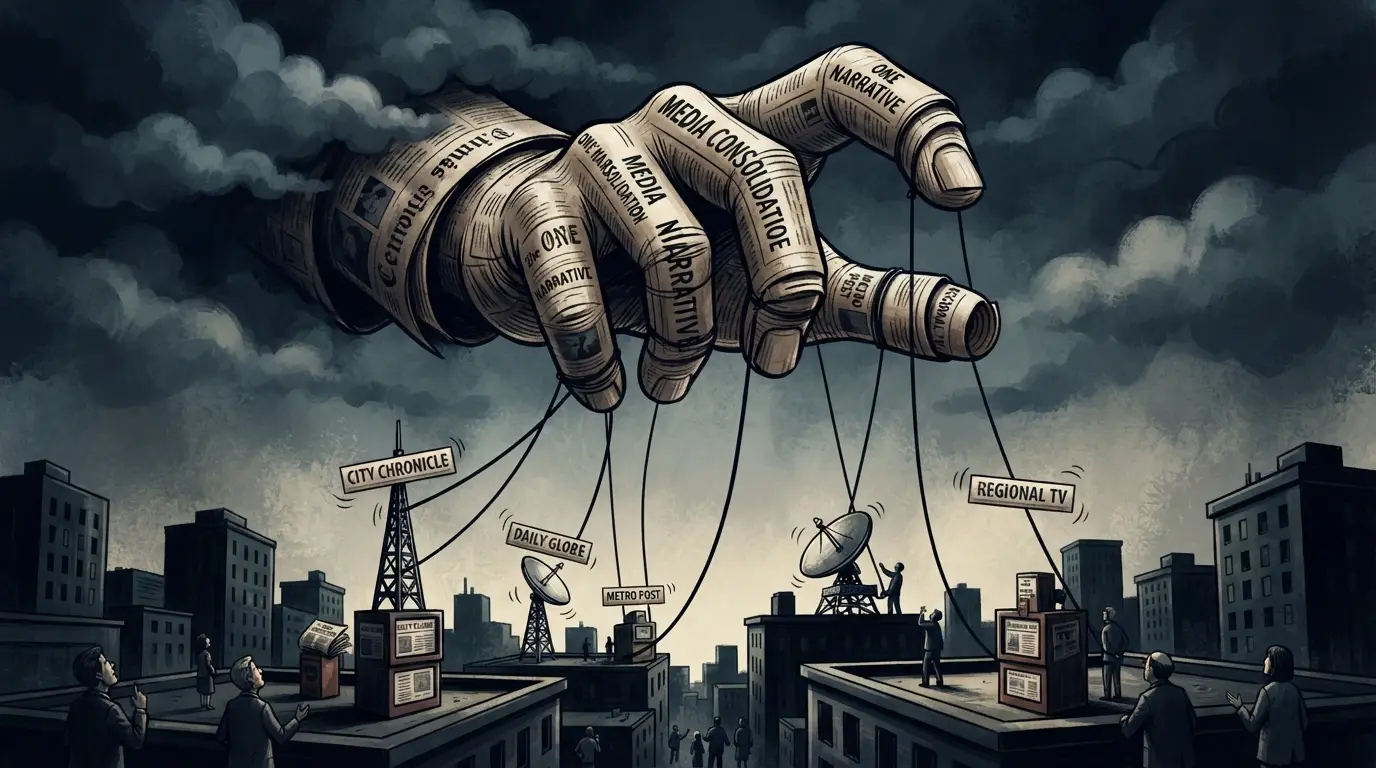
Vincent Bolloré is chairman of Compagnie de l'Odet and a controlling shareholder in Vivendi, the parent of Canal Plus — a position that has made him one of the most influential, and most contested, figures in French media [web:36].
His critics say outlets within his orbit, including the news channel CNews and the weekly Journal du Dimanche, have tilted coverage toward immigration and security themes in ways that amplify far-right narratives [web:36]. Bolloré has rejected this characterization directly, telling French lawmakers in March 2026 that he has become "the perfect scapegoat" for what he calls a politically motivated campaign against him [web:36].
Why Concentrated Ownership Matters
The core issue isn't personal animus toward a businessman — it's structural. When a small number of owners control a large share of a country's television, print, and publishing outlets, editorial "choices" about what counts as news become, in practice, decisions made in boardrooms rather than newsrooms.
"Ownership doesn't have to dictate every story to shape a narrative. It just has to set the boundaries of what gets covered — and what quietly doesn't." — Editorial observation, media concentration analysis
The Holdings at a Glance
| Entity | Sector | Relevance |
|---|---|---|
| Vivendi | Media conglomerate | Parent company with major stakes across TV, publishing, and film [web:36] |
| Canal Plus / CNews | Television | National news channel scrutinized for editorial slant [web:36] |
| Journal du Dimanche | Print/weekly | National weekly newspaper under the same broader ownership structure [web:36] |
| Compagnie de l'Odet | Holding company | Bolloré's primary controlling vehicle [web:36] |
The Defense — and Its Limits
Bolloré's own position deserves a fair hearing: he denies waging any "political war" against public broadcasting and frames the accusations against him as scapegoating [web:36]. That defense highlights a real tension in this debate — critics can overstate direct editorial interference, and ownership does not automatically equal daily newsroom control.
The Harder Question
Even without proof of a memo dictating headlines, concentrated ownership still shapes which stories get airtime, which voices get platformed, and which get quietly deprioritized. That structural power is the real story — regardless of whether a single order was ever given.
What This Means for Readers
Media literacy starts with knowing who owns what you're consuming. A single conglomerate touching news, entertainment, and publishing can create an illusion of diverse perspectives that are, in fact, filtered through one commercial and political worldview. That's not unique to France — it's a pattern worth watching wherever ownership concentrates.
Sourced primarily from Reuters reporting on Bolloré's March 2026 testimony to French lawmakers [web:36]. This piece presents documented ownership facts, critics' analysis, and Bolloré's own public rebuttal — readers should weigh all three.