Talent is Disposable. The Structure Isn't.
Who provides the content, and who controls the pipeline that carries it to an audience? An investigation into how institutions — from the Hollywood studio system to today's platforms — convert creative labor into replaceable inventory.
The Hierarchy Hollywood Built
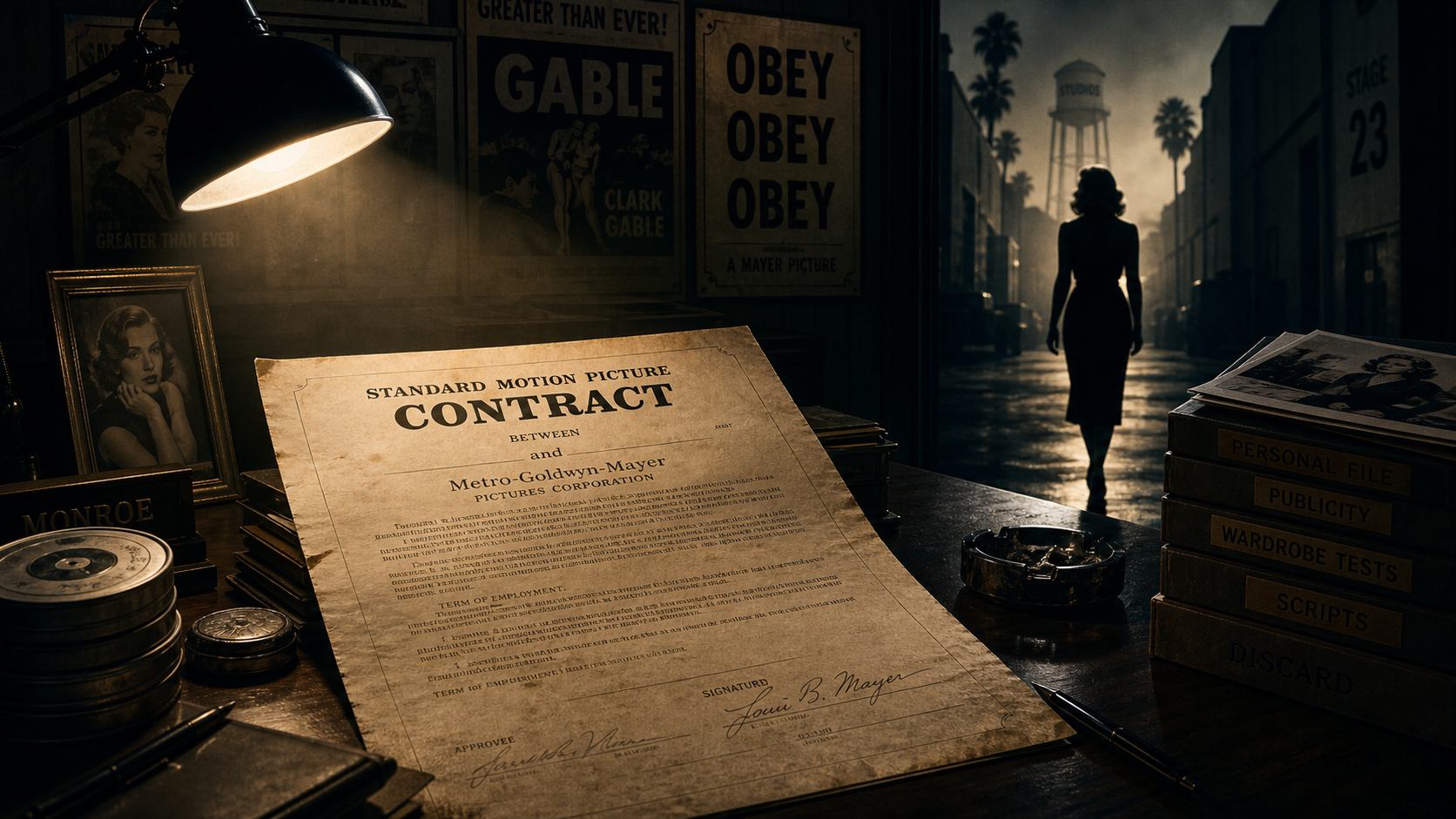
The Hollywood studio system industrialized a durable model: a small number of vertically integrated companies controlled production, distribution, and often the theatres themselves, while performers, writers, and directors worked under exclusive multi-year contracts.1948
Contract players drew a weekly salary whether they worked or not — but they were required to accept nearly any project the studio assigned, and stars who refused too many roles could face unpaid suspension.
Ownership, Not Just Employment
The Big Five studios — MGM, Paramount, Warner Bros., 20th Century-Fox, and RKO — combined production, distribution, and theatre ownership under one roof, giving them control over almost every stage between an idea and an audience.
One period account attributed to a contract performer put it bluntly: "The studios owned you." Stars could be loaned to other studios for profit, without receiving any additional pay themselves.
Who Provides. Who Controls.
The central tension isn't creativity versus business — every production needs financing, legal support, and distribution. The tension is that one side supplies the meaning people show up for, while the other decides who gets credit, access, and continued work.
Talent Provides
- Ideas, craft, and performance that define the work
- The emotional relationship with the audience
- Cultural relevance and reputational risk
- The specific voice that makes a format distinct
Structure Controls
- Contracts, IP ownership, greenlights, and schedules
- Platforms, algorithms, promotion, and audience data
- Brand identity, franchise rights, replacement decisions
- Legal protection, distribution, and revenue allocation
"No one individual is bigger than the brand" is a claim about ownership, not about who actually made the brand valuable.
— A recurring institutional line, examined throughout this documentary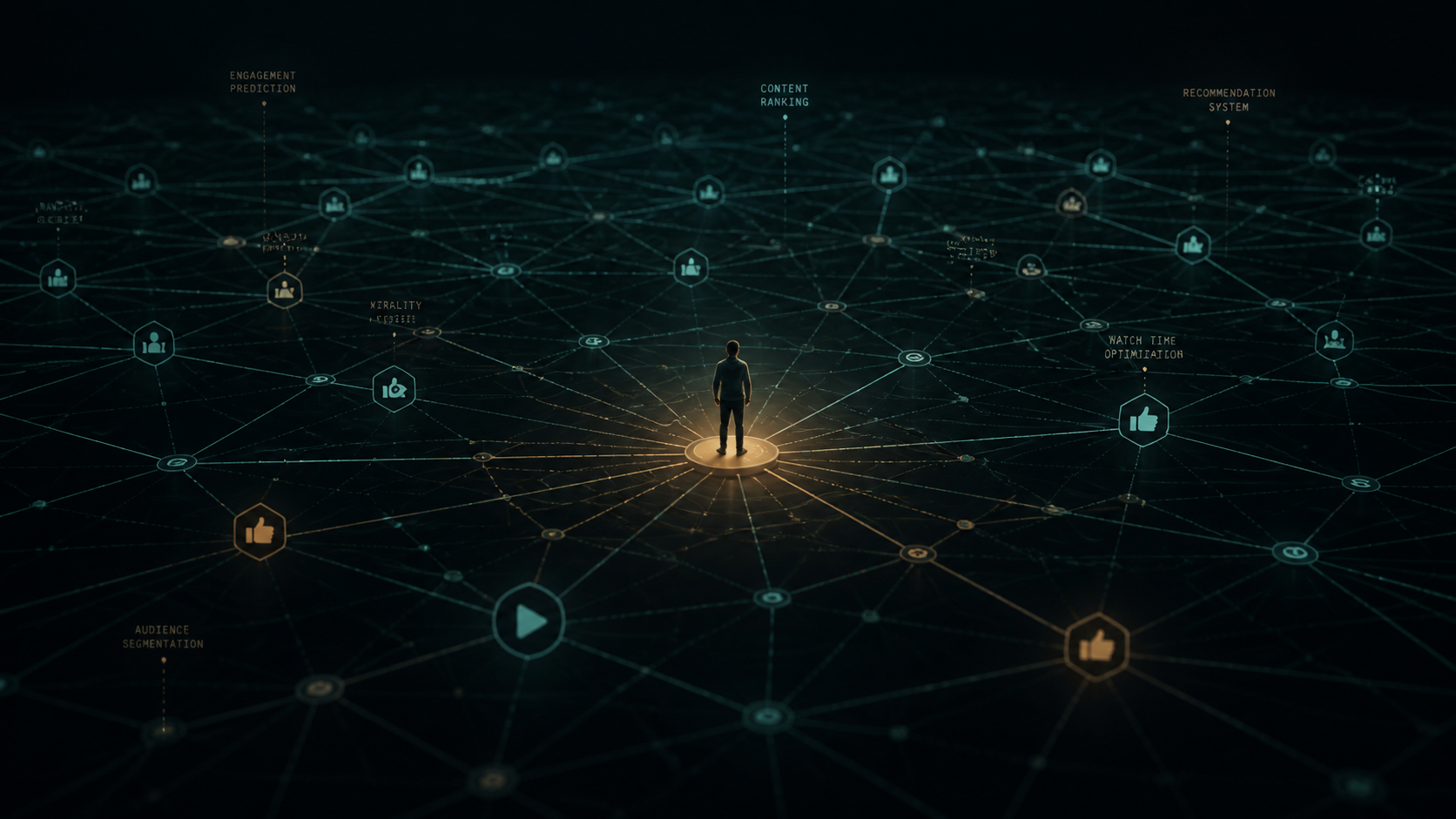
Visualization: a single creator within the structure that decides their visibility.
From Studio Lots to Streaming Feeds
The mechanism for controlling talent has evolved — from exclusive contracts to intellectual-property ownership to algorithmic gatekeeping — but the underlying structure has proven remarkably durable.
The Studio System Era
Eight major studios dominate production, distribution, and exhibition. Performers, directors, and writers sign exclusive long-term contracts and can be suspended without pay for refusing assigned roles.
The Paramount Decision
The Supreme Court rules the major studios' vertical integration of production, distribution, and exhibition violates antitrust law, beginning the breakup of the classic studio system. Most contract players become freelancers.
Platform Work Expands
Gig and platform-mediated work grows an estimated 90 percent, according to the International Labour Organization, as algorithmic systems increasingly assign tasks, set pay, and evaluate performance once handled by human managers.
The Writers' and Actors' Strikes
The Writers Guild of America strikes for 148 days over eroded streaming residuals and the use of generative AI to replace or diminish writers' work and pay; SAG-AFTRA follows with a parallel strike over similar streaming-era compensation and AI concerns.
Algorithmic Management Matures
Research on gig and creator platforms documents algorithmic management as a defining feature of work — systems that assign visibility, evaluate performance, and can suspend accounts unilaterally, often replicating the control of a traditional employer without its obligations.
How "Content" Flattened the Craft
A novelist, a composer, an animator, and a photojournalist do fundamentally different work, with different skills, ethics, and risks. Calling all of it "content" turns distinct crafts into interchangeable inventory for a feed.
An Umbrella Built for Platforms, Not Artists
Labor researchers use "content creator" as an umbrella spanning blogs, video, music, photography, and podcasts — a category that is administratively convenient but obscures real differences in skill, compensation, and creative process.
Platforms need supply that can be uploaded, tagged, ranked, measured, and monetized. Once everything is "content," a years-long investigation and a five-second clip occupy the same managerial category: units to be measured against a metric.
If talent is truly disposable, why do companies fight so hard to restrict what talent can do after leaving?
Non-competes, IP assignment clauses, non-solicitation terms, and platform account ownership all reveal a contradiction: if a person had no value beyond a generic job title, there would be little need to control their next move.
The restriction itself is evidence. Companies recognize the value talent carries — they simply want that value to remain legally attached to corporate property rather than to the person who created it.
The Pattern Repeats Across Media
Different industries, the same structural logic: the brand survives: the people who built its meaning are treated as replaceable line items.
Contract Suspensions
Studio contracts let executives suspend a star's pay for refusing an assigned role, converting creative disagreement into a financial penalty rather than a negotiation.
Residuals Erosion
Streaming platforms can keep a show available indefinitely without licensing it the way broadcast reruns once did, undermining the residual payments writers and actors relied on between jobs.
Algorithmic Visibility
Creators depend on likes, shares, and algorithmic recommendation for income, yet platforms can change ranking criteria or suspend accounts unilaterally, with little transparency or appeal.
Training on the Work
The 2023 WGA contract specifically prohibits studios from using writers' material to train AI models or generate scripts that replace writers, an explicit response to structures treating creative labor as extractable data.
Unilateral Deactivation
Investigations into platform labor find companies can suspend or remove workers unilaterally through automated systems, with pay rates and task allocation set by algorithms workers cannot negotiate or fully see.
Masthead Over Reporter
A publication can retain its name and archive while eliminating the specific reporters, editors, and researchers whose accumulated credibility made the brand trustworthy in the first place.
Disposable Is a Strategy, Not a Fact
Talent is not actually interchangeable in a cultural sense — audiences notice when the writing changes, when the reporting weakens, when the host's timing disappears. It is managed as disposable in a contractual sense, because preserving institutional control matters more to the structure than preserving the person who made the work valuable.
The 2023 Writers Guild agreement shows the alternative is possible: regulated AI use, restored residuals, and guaranteed staffing levels were won not by appealing to a company's goodwill, but by organizing enough leverage to force a renegotiation of who controls what.
| Era | Control mechanism | Talent's leverage |
|---|---|---|
| 1927–1948 | Exclusive multi-year studio contracts, theatre ownership | Almost none until stardom itself became bankable |
| 1948–2000s | Freelance market, but IP and distribution stayed corporate | Agents, unions, and residual payments |
| 2010s–2020s | Streaming licensing, opaque algorithms, platform terms of service | Collective bargaining (WGA, SAG-AFTRA), regulatory pressure |
| 2020s–present | Generative AI training, automated account moderation | Contractual AI protections, still-emerging platform regulation |