The Numbers · 2022–2026
The Cost That Cannot Be Named
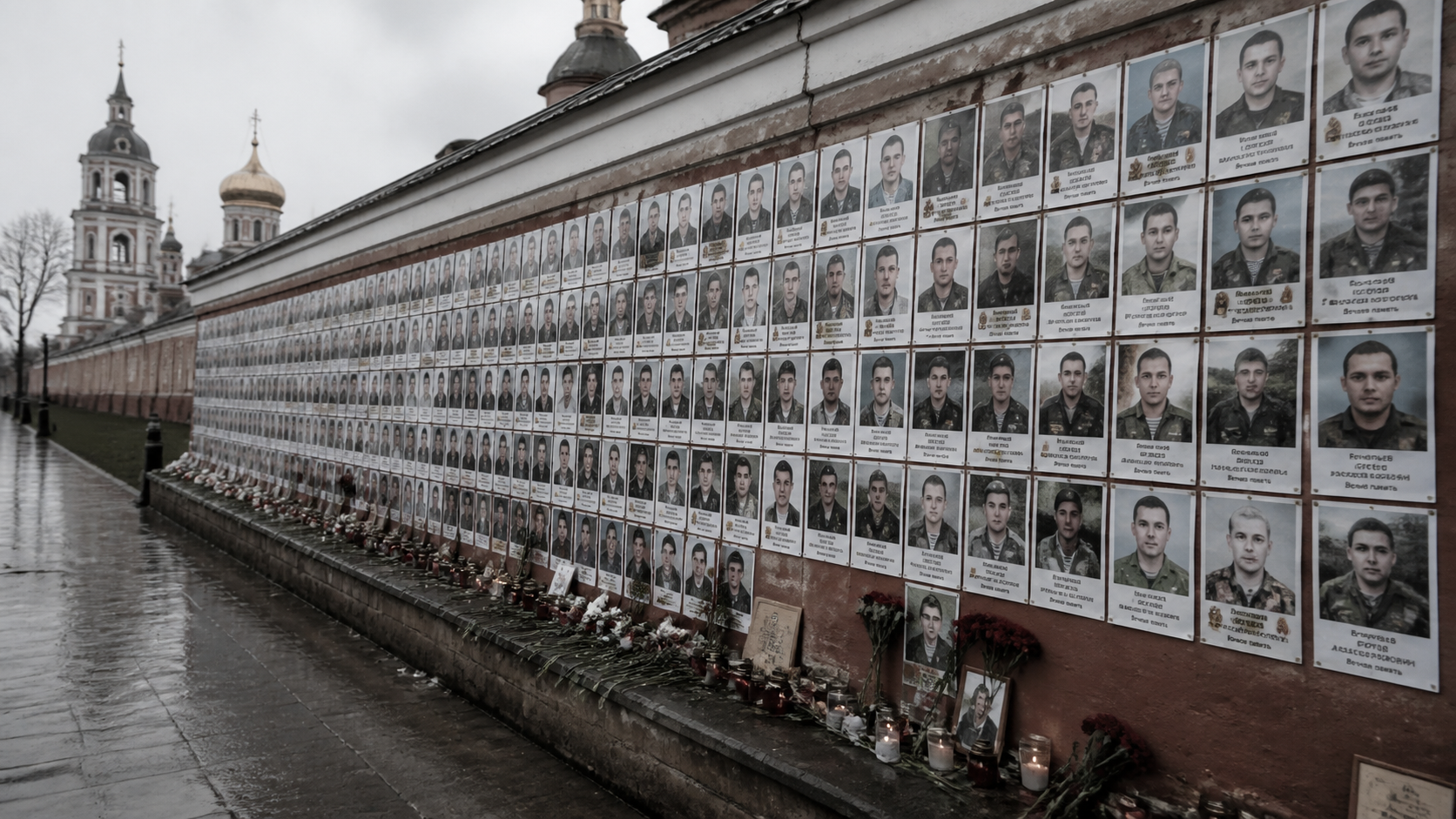
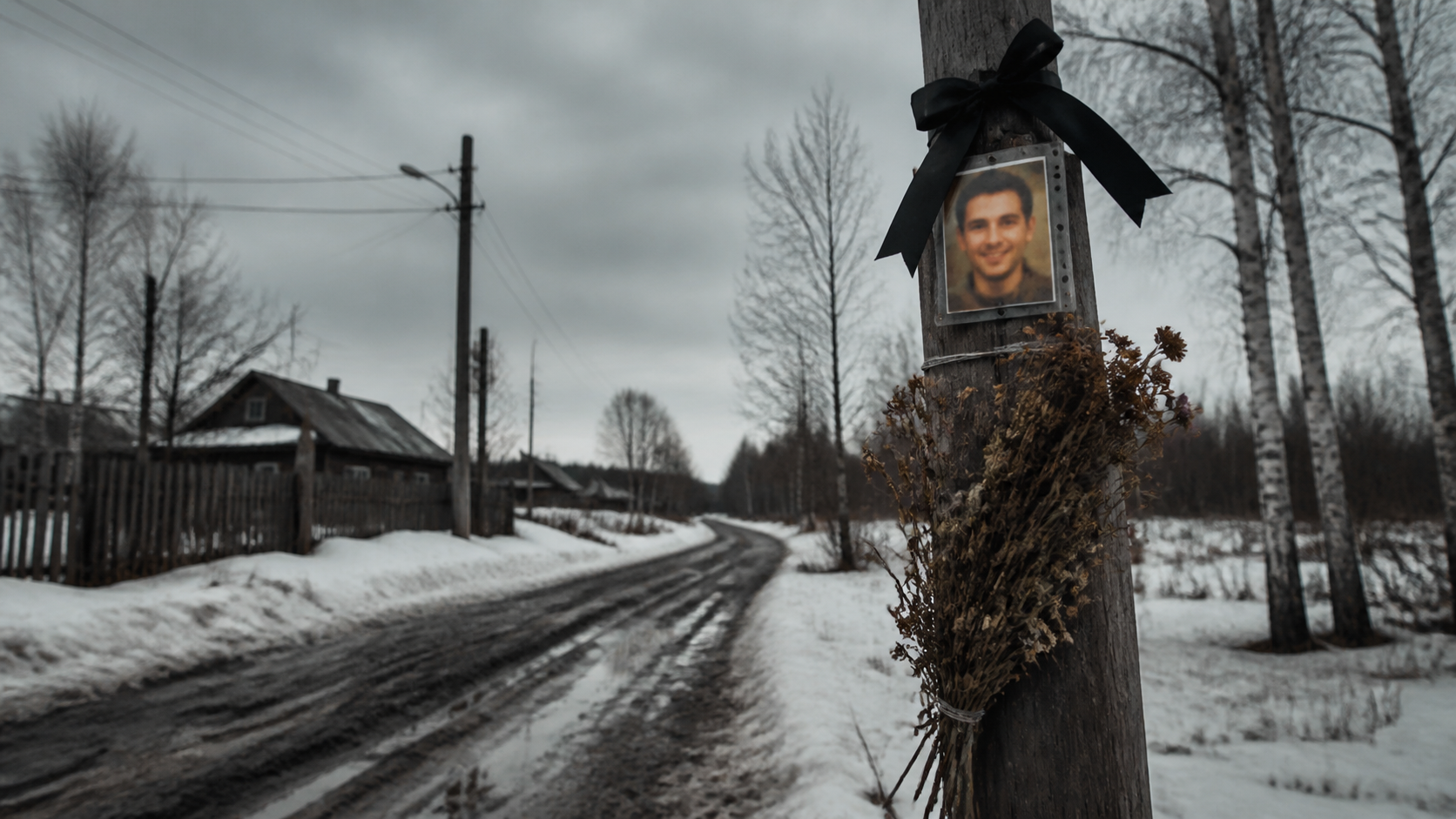
Since February 24, 2022, Russia has averaged over 26,000 military casualties per month, with 2025 alone producing roughly 415,000 casualties at nearly 35,000 per month. What "casualties" means Casualty figures include killed and seriously wounded. NATO estimates roughly 65,000 killed-and-wounded in a recent two-month window alone. BBC-verified obituaries put confirmed Russian deaths at nearly 160,000 — and analysts say that number covers only 45–65% of actual fatalities, implying true deaths of 243,000–352,000 as of late 2025.
The Kremlin calls it a Special Military Operation. Russian law prohibits calling it a war. Journalists who use the word face criminal prosecution. This is not semantic fastidiousness — it is the mechanism that prevents the accounting. You cannot hold a state responsible for losses in a war that is not a war.
The critical demographic detail is not the gross number. It is who is dying. The largest casualty cohort is Russian men in their thirties — precisely the cohort that represents peak fertility, peak economic productivity, and the foundational layer of the next generation.
The Pre-existing Crisis
Putin Knew the Demography Before He Invaded
Russia’s demographic crisis did not begin with the war. Since the end of the Soviet Union, Russia has lost approximately 17 million people. The country was already experiencing the “triple demographic blow” affecting all of Eastern Europe: low birth rate, high mortality, and high emigration. Putin had been publicly acknowledging the demographic problem since his first months as president in 2000.
Some analysts argue the war’s timing reflected Putin’s private understanding that Russia’s demographic and economic situation would not improve over the next two decades — making the window for territorial consolidation now-or-never. If so, the war was not a solution to the demographic crisis. It was a doubling down on a losing position.
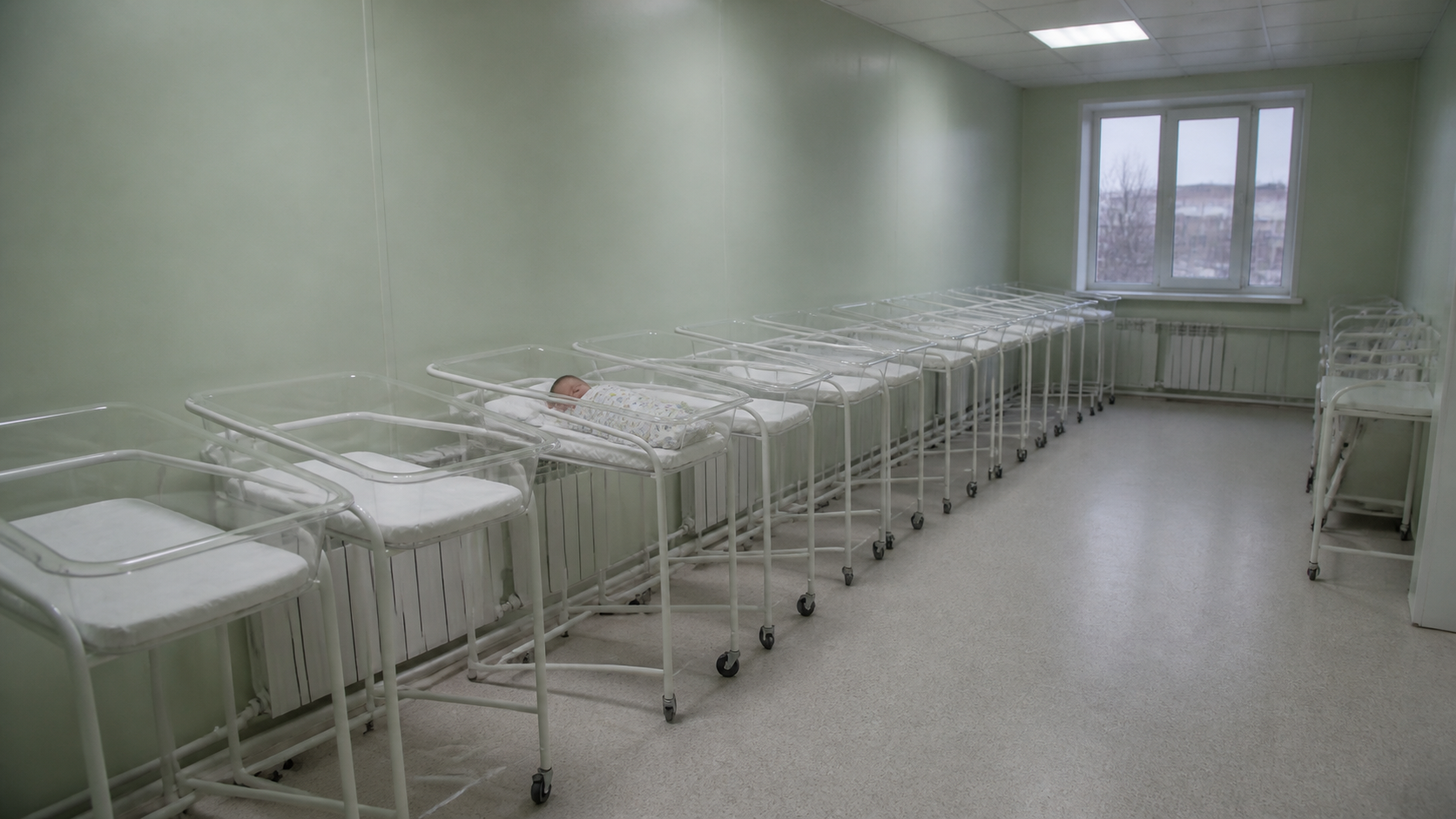
Russia recorded only 1.22 million births in 2024 — its lowest total since 1999. The fertility rate of 1.37 sits far below the 2.1 needed for population replacement.
The Demographers · 2022–2025
The Ornithologists of Our Time
In 1958, ornithologists Tso-hsin Cheng and Zhu Xi warned that eliminating sparrows would destroy the ecological system the harvest depended upon. They were declared criminals. In 2022–2025, Russia’s leading demographers did what scientists are supposed to do: they measured the damage and published the numbers. The state’s response followed the same architecture.
Alexei Raksha, Russia’s most prominent independent demographer, spent years documenting the intersection of war casualties and demographic collapse. He noted that internal data from one Russian region showed male life expectancy dropping from 66 years to 61 years between 2024 and mid-2025 — a five-year collapse in a single year. The foreign agent mechanism Russia's "foreign agent" designation is not simply a label. It requires constant humiliating disclosures on all public communications, restricts professional activities, and functions as social and professional death. It is the 21st-century version of declaring someone a counterrevolutionary — the mechanism of silencing without physical arrest.
By March 2025, Rosstat — Russia’s state statistics agency — had stopped publishing monthly regional data on births, deaths, marriages, and divorces. In mid-2025 it stopped publishing nationwide figures entirely. In 2025, Russian federal agencies removed 140 datasets from public access and stopped updating at least 425 statistical indicators. “Since March 2025, there’s been virtually no publicly available demographic data in Russia,” Raksha wrote before his silencing. Russia classified the data. The data, however, remains true.
“We consider the full suppression of regional demographic statistics a clear sign of failed demographic policy at the regional level.”— Alexei Raksha, demographer, before being designated a foreign agent, May 2025